Biggest Crisis in History”: Global Energy Shock Deepens Amid Iran–US–Israel War
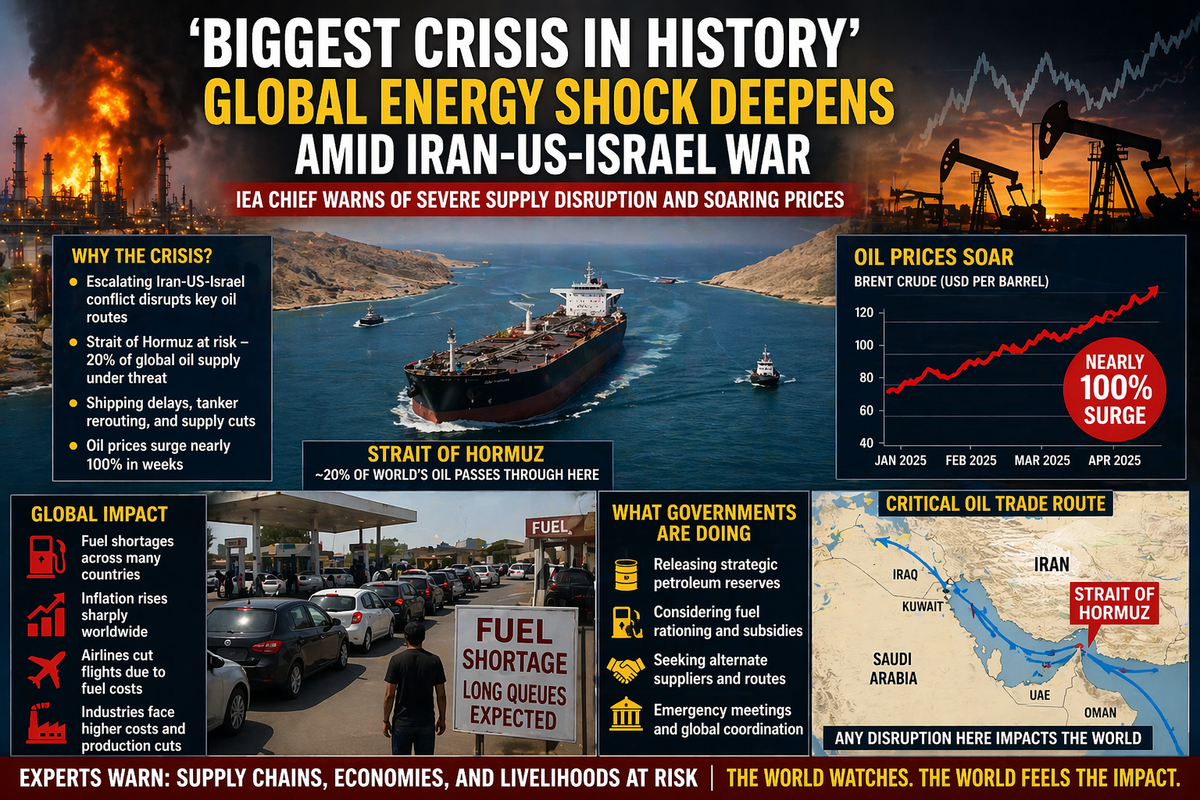
The escalating conflict involving Iran, the United States, and Israel has triggered what global energy leaders are now calling the “biggest energy crisis in history.” The warning, issued by the head of the International Energy Agency (IEA), underscores the severity of a rapidly deepening global supply shock that is sending ripple effects across economies worldwide.
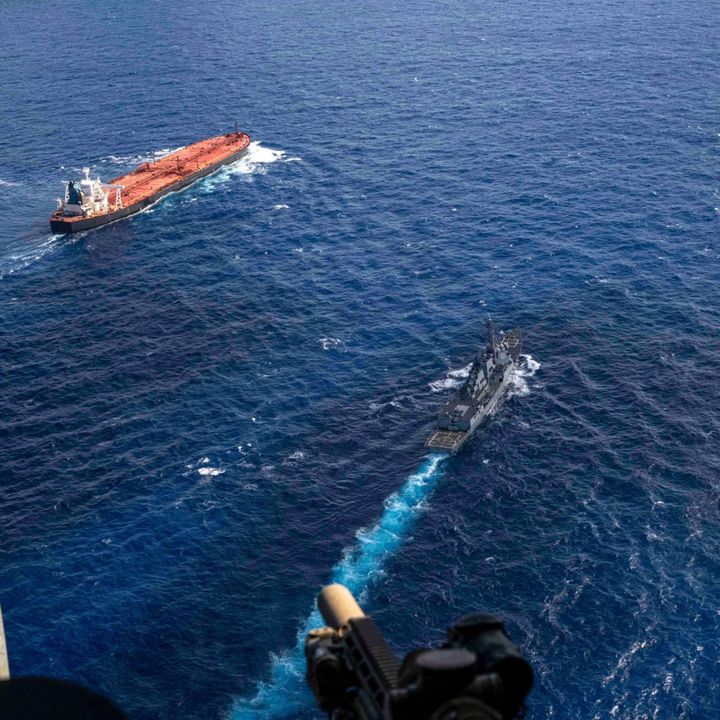
At the heart of the crisis lies the Strait of Hormuz, a narrow but vital maritime route through which nearly one-fifth of the world’s oil supply passes. Ongoing military tensions and disruptions in the region have significantly affected tanker movement, leading to delays, rerouting, and in some cases, complete halts in shipments. This has created an immediate and severe supply crunch in global energy markets.
Oil prices have surged dramatically in response. Benchmark crude rates have nearly doubled within weeks, reflecting panic buying and tightening supply. Energy traders and analysts describe the current situation as a “structural shock”, meaning the disruption is not temporary but deeply embedded in the global supply chain. Unlike past crises, this shock is hitting multiple energy segments simultaneously, including crude oil, natural gas, and refined fuels.
The consequences are being felt far beyond the energy sector. Governments across continents are scrambling to contain the fallout. Several countries have begun tapping into their strategic petroleum reserves, while others are considering emergency measures such as fuel rationing and subsidies. Airlines are cutting routes due to rising jet fuel costs, logistics companies are increasing freight charges, and manufacturing sectors are facing higher input costs.
Developing nations are among the hardest hit. With limited financial buffers, many countries in Asia and Africa are experiencing acute fuel shortages, leading to power cuts and transportation disruptions. In some regions, long queues have formed outside petrol stations, evoking memories of past global oil crises.
Economists warn that the crisis could trigger a broader global economic slowdown. Rising fuel prices are pushing up inflation across sectors—from food production to transportation—placing additional pressure on consumers already dealing with economic uncertainty. There are growing concerns about stagflation, where high inflation combines with stagnant growth, a scenario that can be particularly difficult to manage.
Industry experts note that the current crisis differs from previous ones due to its geopolitical complexity and scale. Unlike isolated conflicts, this situation involves multiple major powers and critical global supply routes, making resolution more complicated. Even if tensions ease in the coming weeks, restoring normal supply levels could take months due to disrupted logistics and depleted reserves.
The crisis has also reignited debates around energy security and diversification. Policymakers are increasingly emphasizing the need to reduce dependence on single chokepoints like the Strait of Hormuz. There is renewed urgency to invest in alternative energy sources, expand domestic production, and build more resilient supply chains.
Meanwhile, global markets remain volatile, reacting sharply to every new development in the conflict. Investors are closely monitoring diplomatic efforts, military movements, and supply data, as even minor changes can significantly impact prices.
As the situation unfolds, one thing is clear: the world is facing an energy shock of unprecedented scale. Whether it evolves into a prolonged crisis or stabilizes in the coming months will depend largely on geopolitical developments and coordinated global responses.