Trump’s Tax Cuts Could Keep the US Economy Growing Strong in 2026
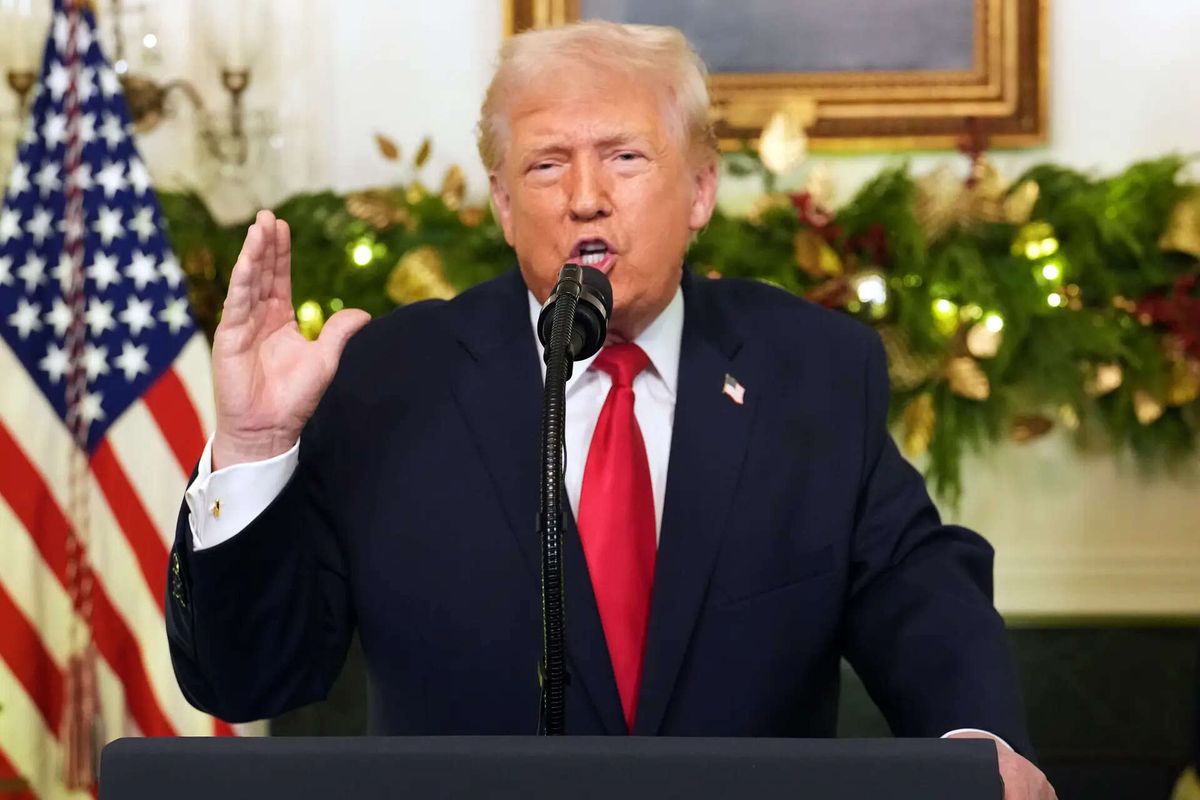
Trump’s Tax Stimulus Set to Support US Economic Growth in 2026
After a turbulent year filled with policy shifts, trade tensions, and global uncertainty, the US economy is heading into 2026 with cautious optimism. Economists believe President Donald Trump’s tax-cuts package will provide a meaningful lift, helping the expansion stay on track even as other headwinds remain.
While the outlook is far from perfect, the combination of higher tax refunds, business investment incentives, easing borrowing costs, and calmer trade policy could give the world’s largest economy just enough momentum to keep moving forward.
Bigger Tax Refunds Could Lift Consumer Spending
One of the most immediate effects of Trump’s tax legislation will be felt by American households.
Larger Refunds in the First Half of the Year
Economists expect taxpayers to receive noticeably larger refunds in the first half of the year thanks to extended income tax cuts and new exemptions for tips and overtime pay. Estimates for the total boost to consumers vary widely, ranging from $30 billion to as much as $100 billion.
On an individual level, refunds are expected to be $300 to $1,000 higher than in a typical year. That extra cash could encourage short-term spending on everyday goods, services, and delayed purchases.
A Temporary Boost, Not a Lasting Surge
While the initial surge in refunds may support consumer spending early in the year, economists caution that the effect is likely to fade. Rising living costs, higher debt levels, and lingering affordability concerns may limit how long households keep spending at elevated levels.
Business Investment Incentives May Have Longer Impact
Many economists believe the more lasting benefit of Trump’s tax package will come from incentives aimed at businesses.
Encouraging Spending on Equipment and Expansion
The legislation allows companies to deduct the cost of investments in plants, machinery, and technology more easily. This change is designed to encourage businesses to modernize operations, expand capacity, and improve productivity.
Some economists estimate the package could lift gross domestic product by about 0.3% this year, even after accounting for offsets such as cuts to social programs.
Small Businesses Look to Upgrade
For manufacturers and small business owners, the tax incentives offer a reason to invest sooner rather than later. Some business leaders say they plan to spend aggressively on high-end equipment that improves efficiency and competitiveness.
These investments could support job creation indirectly by strengthening long-term growth prospects, even if hiring does not surge immediately.
Growth Forecasts Point to a Steady Year
Despite ongoing risks, most economists expect the US economy to maintain a steady pace of expansion.
Economists Expect 2% Growth
Surveys of economists point to economic growth of around 2% in 2026, roughly matching expectations for 2025. While this pace is modest by historical US standards, it would still outperform many other developed economies.
Federal Reserve officials are slightly more optimistic, projecting growth of about 2.3%. They cite supportive fiscal policy, easier financial conditions, and fading tariff impacts as key drivers.
A Decent Year, Not a Boom
Most analysts agree 2026 is unlikely to deliver explosive growth. Instead, the economy appears headed for what many describe as trend growth: stable, steady, and unspectacular.
The US Economy Proved Resilient in 2025
The economy’s recent performance has given forecasters more confidence heading into 2026.
Strong Rebound After Policy Shocks
After an early slump in 2025 driven by tariff-related disruptions, growth rebounded sharply. The economy unexpectedly accelerated in the third quarter, showing resilience despite political uncertainty and global tensions.
That performance reinforced the idea that the US economy remains flexible and capable of absorbing shocks better than many expected.
Job Market Shows Signs of Cooling
While growth continues, the labor market is no longer as tight as it once was.
Unemployment Is Gradually Rising
The unemployment rate climbed to 4.6% late last year, the highest level in more than four years. Economists expect it to average around 4.5% in 2026.
This gradual cooling has raised concerns about wage growth and job security, particularly for lower-income workers.
Investment Could Revive Labor Demand
Some economists believe business investment and lower interest rates could help stabilize hiring later in the year. As companies expand capacity, labor demand may pick up by mid-year.
Tariffs Remain a Key Risk
Trade policy continues to cast a shadow over the economic outlook.
Small Businesses Feel the Pressure
Tariffs remain a major concern for small and mid-sized businesses, many of which face higher input costs. Some companies report significant increases in expenses for imported materials, forcing them to raise prices or absorb losses.
Consumers, already under pressure from higher living costs, are becoming more selective in their spending, which further squeezes margins.
Policy Uncertainty Lingers
Although most forecasters expect fewer trade disruptions than in 2025, uncertainty remains. Legal challenges to certain tariffs and talk of rebate checks tied to tariff revenue add unpredictability to the outlook.
Inflation and Affordability Still Matter
Even if tariff-related inflation fades, affordability remains a major issue.
Price Pressures Are Not Gone
Businesses are projecting price increases of more than 3% in 2026, reflecting ongoing cost pressures. While inflation may not spike dramatically, it continues to weigh on household budgets.
This issue played a role in recent election outcomes and remains a political and economic concern.
AI Boom Adds Both Opportunity and Risk
Artificial intelligence continues to reshape the economy, but its benefits may not be evenly distributed.
Investment Without Massive Hiring
The rush to build data centers and deploy AI technology boosted investment in 2025. However, economists note a disconnect between massive spending announcements and actual job creation.
Unlike past investment booms, AI-driven spending does not appear to generate large numbers of new jobs, raising concerns about long-term labor demand.
Wealth Effects and Inequality
While AI-related stock market gains have boosted wealthier households, the broader economic impact remains uncertain. Concerns about inequality and job displacement persist as the technology evolves.
Geopolitical Risks Add Another Layer of Uncertainty
Global events continue to pose risks to the economic outlook.
International Tensions Could Disrupt Growth
Recent US actions abroad highlight the potential for geopolitical instability to affect markets, energy prices, and trade flows. While not central to forecasts, these risks remain in the background.
Trump’s tax stimulus is expected to provide meaningful support to the US economy in 2026, helping sustain growth after a year of policy shocks. Bigger tax refunds, incentives for business investment, and easing financial conditions all point to a stable year ahead.
Still, challenges remain. Tariffs, a cooling job market, affordability concerns, and uncertainty around AI and geopolitics could limit upside. Most economists agree that 2026 is shaping up to be a solid but unspectacular year — one defined by steady progress rather than dramatic acceleration.