Trump Tax Law 2026: How New Deductions Could Increase Americans' Tax Refunds
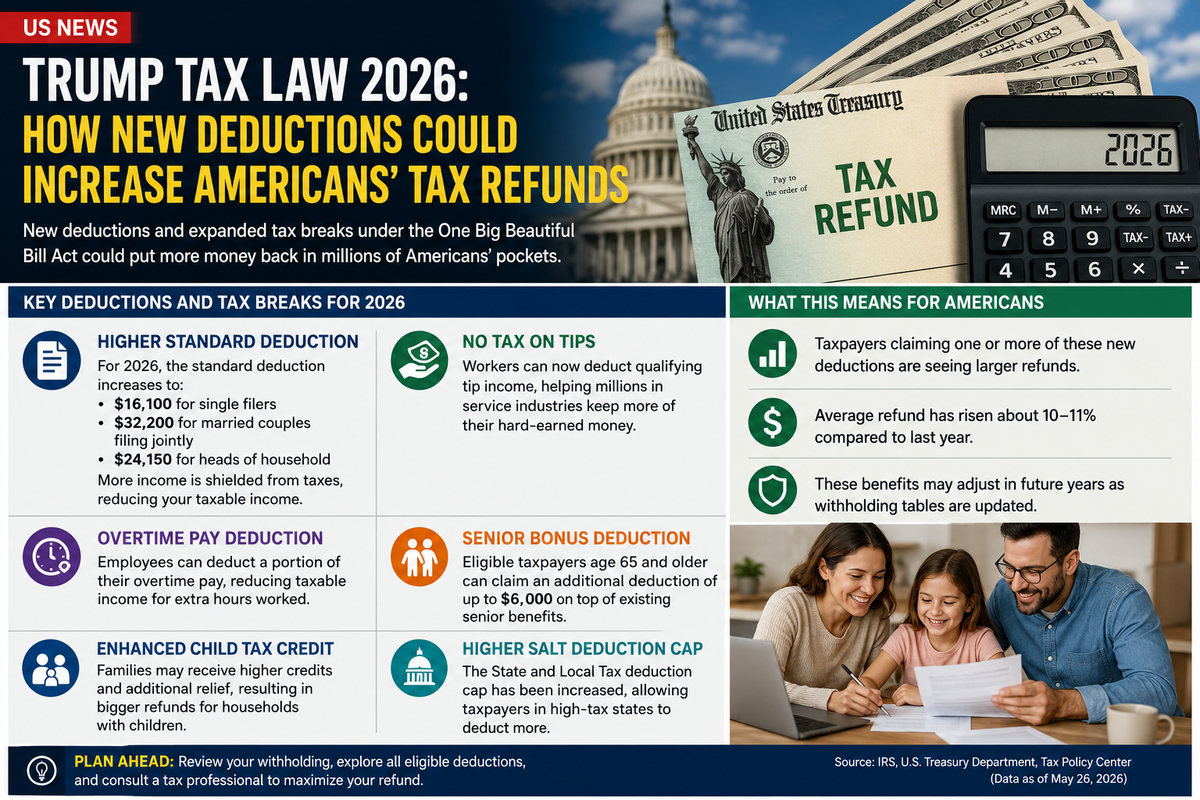
Millions of Americans could see larger tax refunds in 2026 thanks to a series of deductions and tax breaks introduced under President Donald Trump's 2025 tax legislation, commonly referred to as the "One Big Beautiful Bill Act." The law extended several existing tax provisions while adding new deductions aimed at workers, seniors, and families. As taxpayers file their returns, many are discovering that these changes may significantly reduce their taxable income and increase their refunds.
One of the most notable changes is the expansion of the standard deduction. For the 2026 tax year, the standard deduction has increased to $16,100 for single filers, $32,200 for married couples filing jointly, and $24,150 for heads of household. Higher deductions mean more income is shielded from federal taxation, reducing overall tax liability for many households.
The law also introduced deductions for certain types of income that were previously fully taxable. Workers who earn tips can now claim deductions on qualifying tip income, while employees receiving overtime pay may deduct a portion of their overtime earnings. Treasury Department data indicates that millions of Americans have already taken advantage of these provisions during the current filing season.
Senior citizens stand to benefit as well. A new temporary bonus deduction of up to $6,000 for eligible taxpayers aged 65 and older has been added on top of existing senior tax benefits. In some cases, this deduction can substantially reduce taxable income and lower taxes on Social Security-related income.
Families may also receive additional relief through an enhanced Child Tax Credit and other family-oriented provisions included in the legislation. Tax experts note that households with children could see meaningful increases in refunds depending on income levels and eligibility requirements.
Another major change involves the State and Local Tax (SALT) deduction. The cap was significantly increased, allowing eligible taxpayers—particularly those in high-tax states—to deduct a larger portion of state and local taxes from their federal taxable income. This adjustment could result in substantial savings for some middle- and upper-income households.
Recent Treasury and IRS data suggest that taxpayers claiming at least one of the new deductions are receiving noticeably larger refunds than in previous years. The average refund has risen by roughly 10–11% compared with the prior filing season, with some households receiving hundreds of dollars more than they otherwise would have.
However, tax professionals caution that larger refunds may not continue indefinitely. Because withholding tables were not fully adjusted immediately after the law's passage, many taxpayers effectively overpaid taxes during the year. As withholding systems are updated, future refunds could become smaller even though the tax benefits remain in place.
For now, Americans reviewing their 2026 tax returns may find that the combination of higher deductions, expanded credits, and new worker-focused tax breaks translates into larger refunds and lower overall tax bills. Whether those benefits persist in future years will depend on future tax policy decisions and IRS withholding adjustments.