Trump Says US Open To 20-Year Iran Nuclear Freeze If Commitment Is ‘Real’
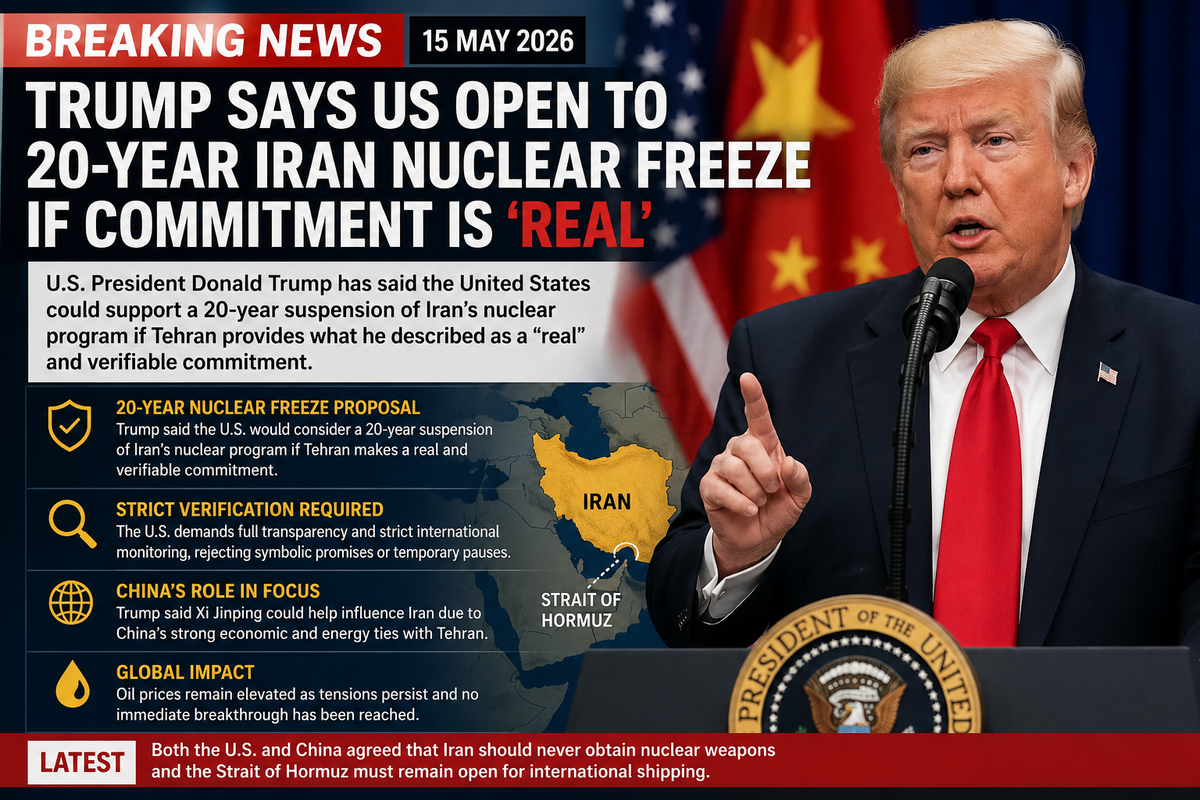
U.S. President Donald Trump has indicated that the United States could support a 20-year suspension of Iran’s nuclear program if Tehran provides what he described as a “real” and verifiable commitment. The remarks came during Trump’s high-profile diplomatic visit to China, where discussions with Chinese President Xi Jinping focused heavily on Iran, global energy security, and ongoing geopolitical tensions in the Middle East.
Speaking to reporters after meetings in Beijing, Trump said Washington’s primary objective remains preventing Iran from developing nuclear weapons. He stated that the U.S. would be willing to consider a long-term nuclear freeze agreement if Iran demonstrates genuine compliance and transparency under international monitoring systems.
The statement marks one of the clearest signals yet that the Trump administration may still be open to diplomatic negotiations despite months of escalating tensions between Washington and Tehran. The ongoing crisis has already affected global oil prices, disrupted shipping activity near the Strait of Hormuz, and increased concerns over regional stability.
Trump emphasized that any agreement would require strict verification mechanisms. “It has to be a real commitment,” he reportedly said, adding that the U.S. would not accept symbolic promises or temporary pauses without concrete oversight.
The Iran nuclear issue has become a major international concern after earlier negotiations reportedly stalled over the duration of uranium enrichment restrictions. Previous U.S. proposals called for a 20-year moratorium on Iran enriching uranium, while Tehran was reportedly willing to consider a shorter five-year suspension.
China’s role in the negotiations is also drawing significant attention. During the summit, Trump suggested that Xi Jinping could potentially influence Iran because of Beijing’s strong economic and energy ties with Tehran. China remains one of Iran’s largest oil buyers, giving it strategic leverage in any future diplomatic discussions.
According to reports, Trump and Xi agreed that Iran should never possess nuclear weapons and that the Strait of Hormuz must remain open for international shipping and oil transportation. The narrow waterway is one of the world’s most critical energy routes, with a large portion of global crude oil exports passing through it every day.
Global markets reacted cautiously to the developments. Oil prices continued rising amid uncertainty surrounding the region and concerns that no immediate breakthrough had been achieved during the Beijing summit. Analysts believe investors remain skeptical about whether Iran and the United States can reach a lasting agreement after years of hostility and failed negotiations.
Iran has consistently maintained that its nuclear program is intended for peaceful purposes. However, Western powers, including the United States, continue to suspect that Tehran seeks the capability to build nuclear weapons.
While no formal agreement has yet been announced, Trump’s comments suggest that diplomatic channels between Washington and Tehran may still remain open, even amid rising tensions and ongoing geopolitical uncertainty.