Trump-Hosted Kennedy Center Honors Hit Ratings Low, But Officials Call It a Financial Success
Kennedy Center Responds to Low Ratings for Trump-Hosted Honors Telecast
The Kennedy Center is pushing back after this year’s Kennedy Center Honors telecast recorded the lowest TV viewership in the event’s history. Despite the disappointing Nielsen numbers, officials say the night was still a success, pointing to strong demographic performance, massive social media engagement, and a reported $23 million raised.
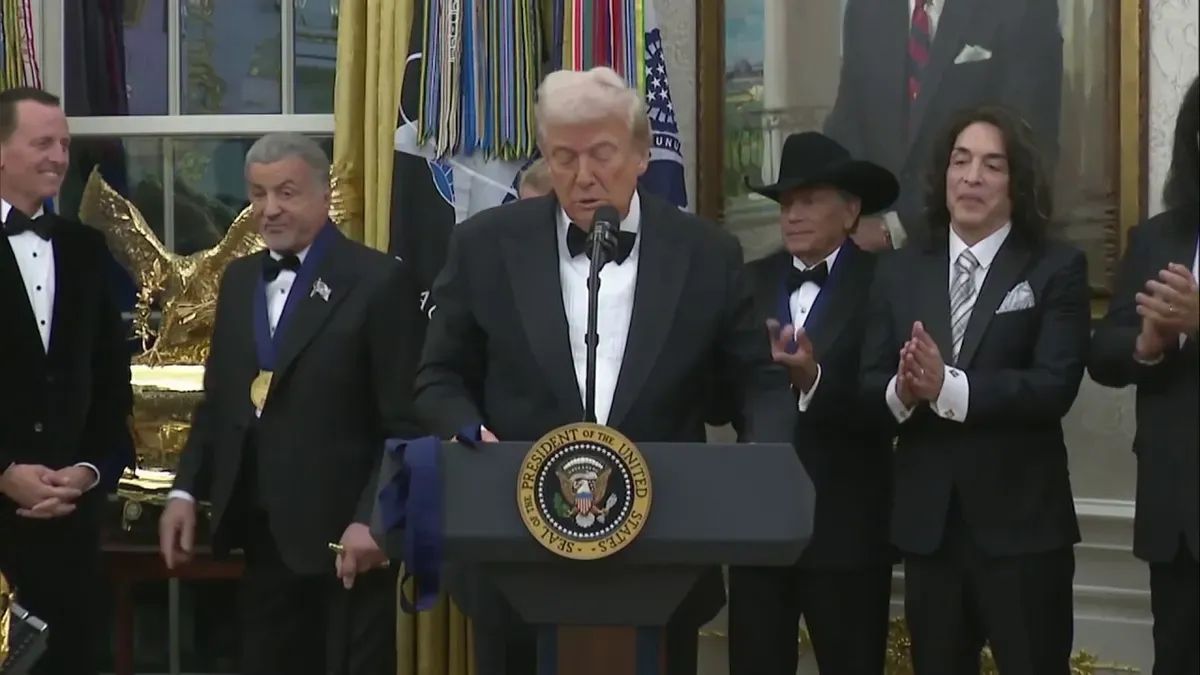
The annual ceremony, which celebrates lifetime achievements in the arts, aired on CBS on December 23 and was hosted by former President Donald Trump. The broadcast marked the first time a sitting U.S. president hosted the event, making it one of the most talked-about editions in recent memory.
All-Time Low Nielsen Ratings Spark Debate
Viewership Drops to 3.01 Million
According to Nielsen Live + Same Day data, the December 23 broadcast averaged 3.01 million viewers on CBS. That figure represents the lowest audience ever recorded for the Kennedy Center Honors telecast.
By comparison, last year’s broadcast drew 4.1 million viewers. However, the 2024 event aired on a Sunday night and benefited from a strong 60 Minutes lead-in boosted by NFL football. This year’s ceremony aired on a Tuesday, just two days before Christmas, a notoriously difficult time for television viewership.
The sharp drop immediately fueled criticism and headlines questioning whether Trump’s involvement hurt the event’s appeal.
A Tough Night for Broadcast TV
Industry analysts note that traditional television viewing continues to decline overall, particularly around the holidays. Many viewers now choose streaming, travel, or family gatherings over scheduled TV programming during the final week of December.
Still, the historically low rating made this year’s telecast stand out, prompting a strong response from Kennedy Center leadership.
Kennedy Center Pushes Back Against Ratings Criticism
Officials Call Comparisons Unfair
Roma Daravi, vice president of public relations for the Kennedy Center, issued a statement defending the broadcast. She argued that comparing this year’s ratings to previous years was misleading due to major differences in scheduling and viewing habits.
She described the criticism as an “apples-to-oranges comparison” and suggested that political bias influenced how the numbers were being interpreted. According to Daravi, the broadcast faced multiple disadvantages, including a Tuesday air date and the timing so close to Christmas.
Strong Performance in Key Demographics
Despite the low total audience, the Kennedy Center says the program performed extremely well among adults aged 25 to 54. The broadcast reportedly tied for the top spot in that demographic on the night, competing directly with a live NBA doubleheader.
For advertisers and sponsors, demographic performance often matters as much as total viewership, if not more. From that perspective, the center argues the event delivered solid value.
Social Media Engagement Claims Draw Attention
Kennedy Center Cites Massive Online Reach
Beyond television ratings, the Kennedy Center highlighted what it called a major surge in social media engagement. According to the organization, the Honors generated 1.5 billion social media impressions in a single night.
That figure represents a dramatic jump from the estimated 50 million impressions reported last year. Officials say the increase shows that the event resonated far beyond traditional TV audiences.
Questions Remain Around Digital Metrics
While the center emphasized its digital reach, those numbers could not be independently verified. Unlike Nielsen ratings, social media impressions lack a single standardized measurement system across platforms.
This has led some critics to question how those figures were calculated and whether they accurately reflect meaningful engagement rather than passive exposure.
$23 Million Raised Becomes the Center’s Key Defense
Fundraising Nearly Doubles Last Year’s Total
Perhaps the strongest argument in the Kennedy Center’s defense is financial. According to the organization, this year’s Honors raised $23 million, nearly double what was generated by last year’s ceremony.
The funds support the center’s programming, education initiatives, and ongoing operations. From an institutional perspective, the fundraising success may outweigh concerns about television ratings.
Measuring Success Beyond Viewership
For arts organizations, fundraising is often a more critical metric than TV ratings alone. The Kennedy Center appears to be reframing the conversation, shifting focus from audience size to financial impact and long-term sustainability.
The Ceremony and Honorees
Stars Celebrated at the 2025 Honors
The ceremony itself was taped on December 7 and later broadcast on CBS. This year’s honorees included a diverse group of influential artists:
- Sylvester Stallone
- Michael Crawford
- KISS
- George Strait
- Gloria Gaynor
The lineup spanned film, music, theater, and popular culture, staying true to the Honors’ tradition of celebrating excellence across artistic disciplines.
A Night Meant to Celebrate the Arts
Despite the controversy surrounding the broadcast, supporters emphasize that the focus of the evening remained on honoring the achievements of these artists. Performances and tributes highlighted decades of cultural impact, drawing praise from attendees and fans alike.
Trump’s Growing Influence at the Kennedy Center
First Sitting President to Host the Honors
Donald Trump’s role as host marked a historic first for the Kennedy Center Honors. While past presidents have attended the ceremony, none had ever hosted the televised event while in office.
His involvement ensured heightened attention but also brought political tension into an event traditionally viewed as nonpartisan.
Trump’s Takeover of the Kennedy Center Board
Weeks after taking office, Trump moved to reshape the Kennedy Center’s leadership. He removed board members appointed by former Presidents Joe Biden and Barack Obama, ensuring control over the institution’s direction.
Those changes paved the way for Trump to be selected as chairman of the arts institution, a move that drew both praise from supporters and criticism from opponents.
Claims of Media Bias Resurface
Kennedy Center Pushes Back on Coverage
Following Trump’s takeover, the Kennedy Center has repeatedly accused media outlets of bias when reporting negatively on its operations. The response to the Honors ratings fits into that broader pattern.
Officials argue that coverage focused too heavily on raw numbers without accounting for industry-wide declines and changing audience behavior.
A Divisive Moment for a Cultural Institution
The situation highlights a larger tension facing cultural institutions in politically polarized times. Events once seen as universally celebratory now risk becoming lightning rods for ideological debate.
What the Low Ratings Really Mean
TV Audiences Are Changing
The record-low ratings may say more about the current state of broadcast television than about the Kennedy Center Honors themselves. With streaming services, social media, and on-demand viewing dominating entertainment habits, appointment television continues to struggle.
Holiday scheduling further complicates the picture, especially for events airing midweek.
Success Depends on the Metric
If success is measured by live TV viewers, this year’s Honors underperformed. If it is measured by fundraising, demographics, and online reach, the Kennedy Center has a strong case that the night achieved its goals.
Final Thoughts
The Trump-hosted Kennedy Center Honors may have delivered record-low Nielsen ratings, but the full story is more complicated. Strong demographic performance, massive claimed social media engagement, and $23 million raised paint a different picture of success.
As the entertainment industry continues to evolve, traditional ratings may no longer be the sole measure of impact. For the Kennedy Center, the debate now centers on how success should be defined in a rapidly changing media landscape.