
The Science Behind Mining for Riches on the Deep Sea Floor
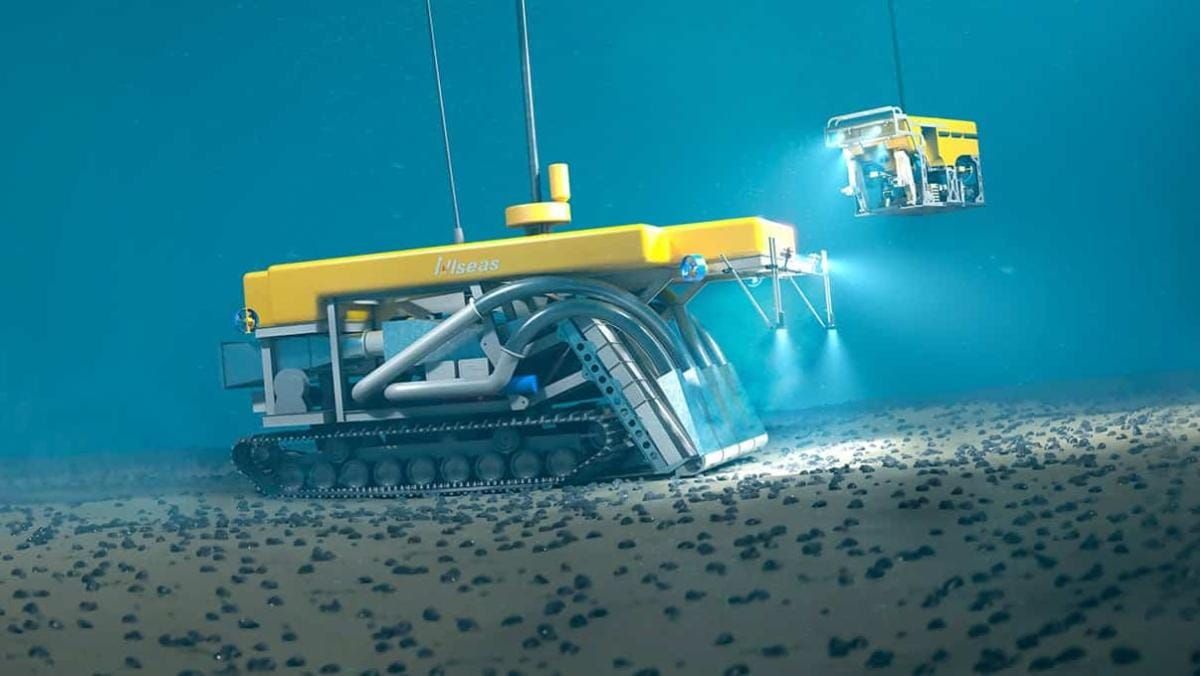
Below the oceans surface there is a place that people do not know much about the deep sea. At depths of 4000 to 6000 meters the seabed has a lot of mineral deposits that people are interested in. Scientists and companies are looking at sea mining as a way to get the metals we need for things like batteries, renewable energy and advanced electronics.
What are they mining?
The main things that people want to mine from the sea are polymetallic nodules, seafloor massive sulfides and cobalt rich crusts. These things have elements like nickel, cobalt, copper and rare earth metals.
Polymetallic nodules are like potato shaped rocks on the ocean floor. They formed over millions of years as minerals accumulated layer by layer. Seafloor massive sulfides are found near vents, where hot water rich in minerals comes from under the Earths crust and cools down forming metal rich deposits.
How the Technology Works
Deep sea mining uses underwater robots and engineering systems. Operated vehicles and autonomous machines are sent from special ships to the seabed. These machines collect nodules. Cut into mineral deposits and bring the material to the surface through pipes.
The process has three stages:
- Exploration, using sonar mapping and sampling
- Extraction using robotic collectors
- Transport through pipelines to surface vessels
The technology has to be strong enough to withstand extreme pressure, darkness and very cold temperatures making it one of the hardest engineering environments on the planet.
Environmental Concerns
Even though deep sea mining could be good for the economy it has raised some concerns about the environment. The deep ocean has ecosystems, many of which we do not know much about. If we disturb the seabed we could destroy habitats that may take centuries to recover.
When we mine we make sediment plumes that can spread across areas and affect marine life far from the mining site. Noise, pollution and chemical leaks are also bad for the delicate ecosystems.
Scientists are warning us that if we disrupt these environments the damage could be permanent because it takes a time for the deep sea to recover.
Global Race and Regulation
Countries and companies are competing for the rights to mine the seabeds especially in places like the Clarion Clipperton Zone in the Pacific Ocean. The International Seabed Authority is in charge of regulating what happens in waters and making sure the environment is protected.
The rules are still being made and people are debating whether we should start mining before we fully understand the long term effects. Some countries and environmental groups think we should stop mining for now until we have scientific data.
The Future of Deep Sea Mining
As we move towards energy we will need more critical minerals. Deep sea mining could help us get these minerals. It is a trade off between economic benefits and protecting the environment.
The challenge is to make sure that technology and ecology work together. Whether deep sea mining is a solution or a risk to the environment will depend on how science, policy and industry work together in the coming years. Deep sea mining, like sea mining is a complex issue that requires careful consideration of deep sea mining and its effects.