Tesla vs Nvidia: Elon Musk’s AI Chip Bombshell Sparks a New Self-Driving Showdown
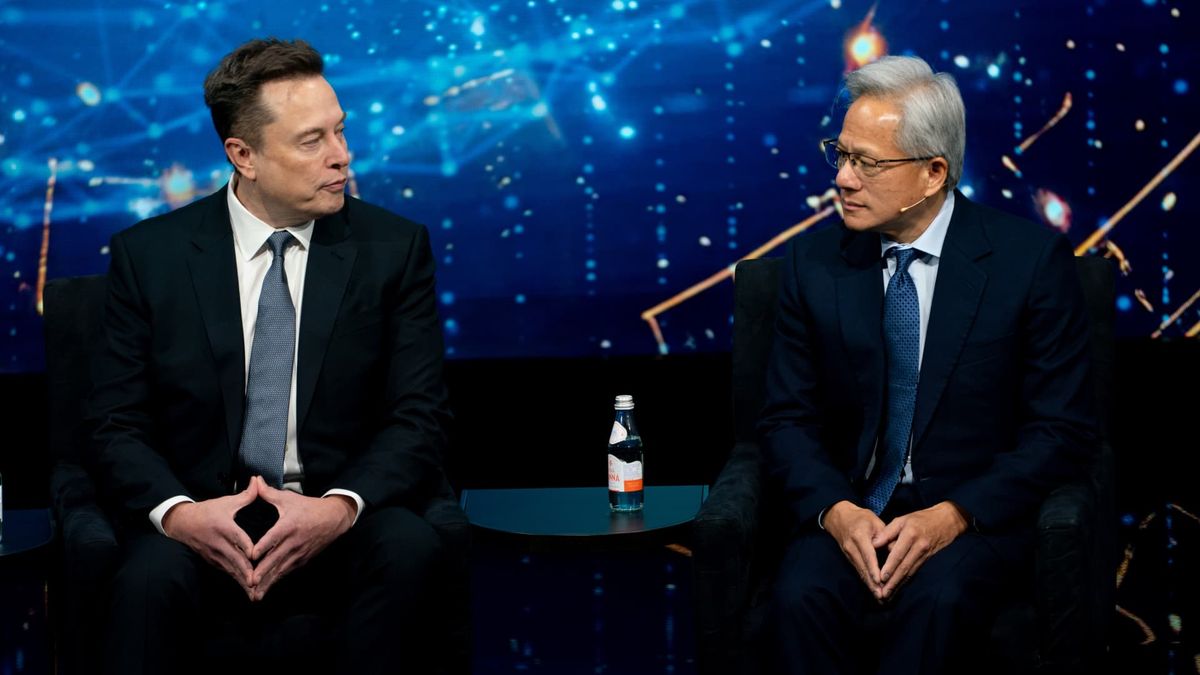
Tesla Fires Back at Nvidia in the Race for Self-Driving AI
The battle for the future of self-driving cars just took a dramatic turn. Over the weekend, Tesla delivered what many are calling a rare double blow to Nvidia, sending a clear message that it intends to control its own destiny in autonomous driving — from chips to software to data.
Elon Musk revealed that Tesla’s next-generation AI5 self-driving chip is nearly complete, while its successor, AI6, is already in development. At the same time, Tesla is restarting Dojo 3, its in-house AI training system, signaling a renewed push into large-scale AI model training.
All of this comes just days after Nvidia unveiled a major new autonomous vehicle platform at CES 2026, setting the stage for a high-stakes clash between two of the most powerful players in AI and mobility.
Why This Tesla–Nvidia Rivalry Matters
Autonomous vehicles are no longer just about electric cars. They are about artificial intelligence, custom hardware, massive data pipelines, and control over the entire technology stack.
Nvidia wants to be the brain behind self-driving cars for every automaker. Tesla wants to build everything itself.
This tug-of-war could shape not only the future of transportation but also the long-term fortunes of two of the world’s most valuable tech companies.
Tesla’s Big Reveal: AI5 Nearly Done, AI6 Already Started
A New Chapter in Tesla’s Chip Strategy
Elon Musk announced that Tesla’s AI5 chip, designed specifically for self-driving inference, is close to completion. He also confirmed that AI6 development is already underway, showing Tesla’s aggressive pace in custom silicon design.
The AI5 chip is expected to enter high-volume production in 2027 and will replace the current AI4 hardware in Tesla vehicles. Manufacturing will be handled by Taiwan Semiconductor Manufacturing Company, with Samsung Electronics lined up to support U.S.-based production.
This isn’t a sudden shift. Tesla has been designing its own in-car chips since 2019, when it moved away from Nvidia hardware for vehicle compute. The latest announcement simply confirms that Tesla is doubling down on independence.
What These Chips Actually Do
Despite all the buzz, it’s important to clarify what AI5 and AI6 are designed for.
These chips are focused on inference at the edge. That means they run Tesla’s Full Self-Driving neural networks directly inside the vehicle, processing camera feeds and making real-time driving decisions without relying on external systems.
This approach gives Tesla several advantages:
- Full control over performance and optimization
- Lower long-term costs per vehicle
- Reduced dependence on third-party suppliers
- Faster iteration of software and hardware together
In short, Tesla wants its cars to think using Tesla-designed brains.
Nvidia Strikes First With a Full Autonomy Platform
Nvidia’s Vision: Power Every Automaker
Nvidia didn’t sit still. At CES 2026, the company unveiled Alpamayo, an open-source autonomous vehicle AI toolkit designed to accelerate self-driving development across the industry.
This fits neatly into Nvidia’s broader strategy: become the default autonomy platform for automakers that don’t want to build everything from scratch.
Under its NVIDIA DRIVE ecosystem, Nvidia offers a complete package:
- In-vehicle computers like Orin and Thor
- Operating systems and software tools
- Reference vehicle designs with validated sensors
- Safety, simulation, and validation frameworks
- Pre-trained AI models to speed up development
For many automakers, this plug-and-play approach is far more practical than building custom chips and AI systems from the ground up.
Why Nvidia’s Approach Is So Attractive
Most car companies don’t have Tesla’s decade of autonomy data or the billions required to develop custom silicon. Nvidia offers them a shortcut.
Instead of reinventing the wheel, automakers can tap into Nvidia’s massive ecosystem and focus on vehicle design, branding, and manufacturing.
This is why Nvidia continues to sign deals across the global auto industry, even as Tesla goes its own way.
Tesla’s Closed-Loop Autonomy Strategy
Owning the Entire Self-Driving Stack
Tesla’s strategy is fundamentally different. Rather than selling tools to others, Tesla is building a closed-loop system that covers every layer of autonomy.
That system includes:
- Tesla-designed in-car AI chips
- A camera-first perception system
- Proprietary self-driving software
- A massive real-world data flywheel powered by millions of vehicles
Every Tesla on the road feeds data back into the system, helping improve the neural networks that power Full Self-Driving. This feedback loop is something no other automaker can easily replicate.
Why Data Is Tesla’s Secret Weapon
While Nvidia excels at providing tools, Tesla excels at collecting real-world driving data at scale.
Millions of Tesla vehicles continuously capture edge cases, rare scenarios, and everyday driving behavior. This data fuels Tesla’s AI models and gives it a long-term advantage in autonomy performance.
In the race to true self-driving, data may matter just as much as raw computing power.
The Dojo 3 Comeback: Tesla Reenters AI Training
Why Training Is a Different Beast
While Tesla’s AI5 and AI6 chips are designed for in-car inference, training large AI models is an entirely different challenge.
Training modern AI systems requires enormous computing power. For example, Meta reportedly trained its Llama 3.1 model using more than 16,000 Nvidia H100 GPUs, consuming massive amounts of energy and capital.
This is where Nvidia still dominates. Its GPUs, software ecosystem, and scale make it the leader in AI training infrastructure.
What Dojo 3 Really Signals
Tesla’s decision to restart Dojo 3 suggests it hasn’t given up on training its own AI models. However, most analysts believe this points to a hybrid approach rather than a full break from Nvidia.
Tesla is likely to:
- Use its own chips and systems for specific training tasks
- Continue relying on Nvidia where scale and efficiency matter most
Until Tesla demonstrates large-scale training clusters running entirely on its own silicon with competitive performance and cost, Nvidia remains firmly in the lead on the training side.
What This Means for Investors
Promises vs Execution
Elon Musk has made bold claims about autonomy for years. For investors, the story is no longer about vision — it’s about follow-through.
The completion of AI5, the development of AI6, and the revival of Dojo 3 are concrete steps. But markets will be watching closely for real-world results:
- Improved Full Self-Driving performance
- Reduced hardware costs
- Faster autonomy rollouts
Nvidia Still Holds a Strong Hand
Despite Tesla’s advances, Nvidia remains deeply embedded across the AI landscape. From data centers to automakers to robotics, its influence continues to grow.
Rather than a zero-sum battle, this rivalry may result in two winners serving different markets:
- Tesla dominating its own ecosystem
- Nvidia powering the rest of the industry
The Bigger Picture: A Defining Moment for Autonomous Vehicles
The clash between Tesla and Nvidia highlights a fundamental question in the future of technology: should companies build everything themselves, or rely on powerful platforms?
Tesla is betting that vertical integration will give it unmatched control and long-term advantages. Nvidia is betting that scale, partnerships, and tools will win the broader market.
Either way, the autonomous vehicle industry is entering one of its most important phases yet — and the next few years could determine who truly leads the road ahead.