Strong Earthquake Hits China, Emergency Teams Rush to Affected Areas
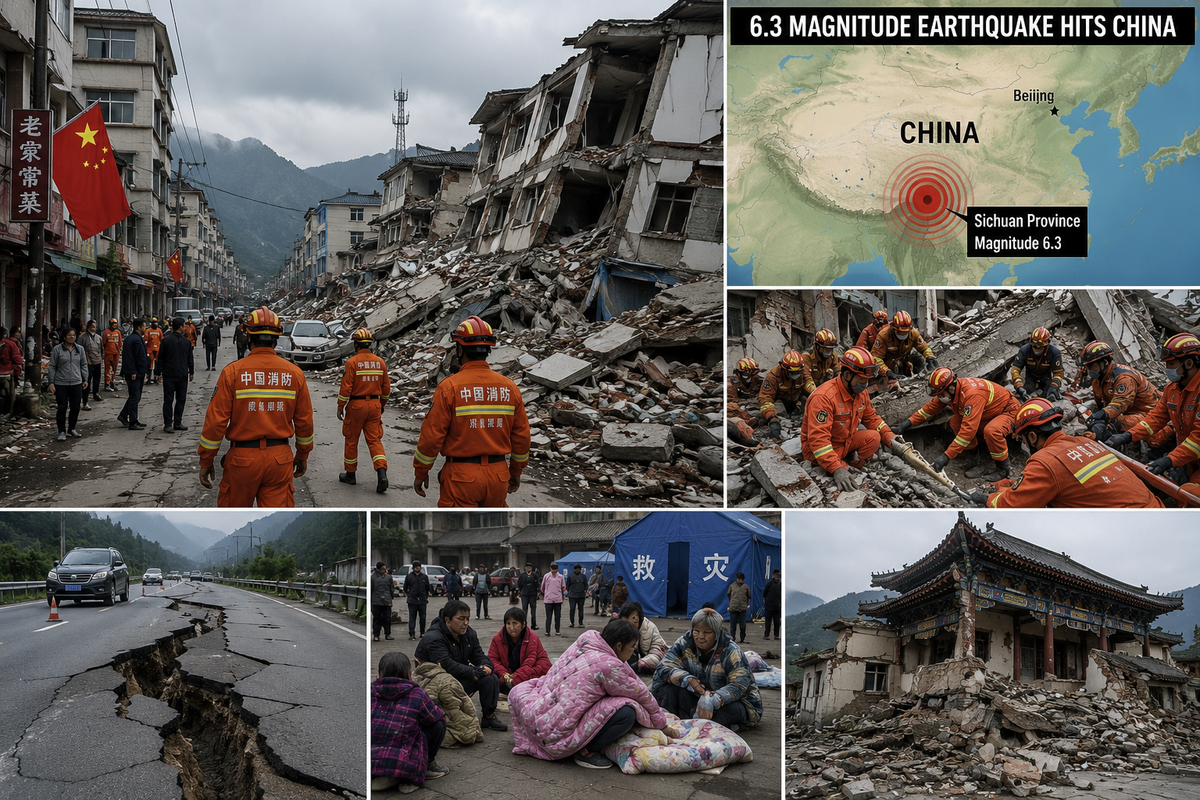
Powerful Tremor Triggers Rescue and Relief Operations
A strong earthquake struck parts of China on June 17, 2026, prompting emergency response efforts and raising concerns about potential damage in affected regions. The quake, measured at approximately 6.3 magnitude, was felt across several cities and towns, with residents reporting strong shaking that lasted for several seconds.
Authorities quickly activated emergency protocols as rescue teams, medical personnel, and disaster response units were deployed to assess the situation. Initial reports indicated damage to buildings, roads, and public infrastructure in areas closest to the epicenter, although the full extent of the impact was still being evaluated.
The earthquake sent people rushing out of homes, offices, schools, and commercial establishments as tremors spread across a wide area. Emergency management agencies urged residents to remain cautious and follow official safety instructions, particularly due to the possibility of aftershocks.
Rescue Teams Mobilized
Chinese authorities launched immediate rescue and relief operations following the quake. Firefighters, police personnel, and disaster management teams were dispatched to affected communities to search for trapped individuals and assist injured residents.
Temporary shelters were established in some locations to accommodate people displaced by structural damage or safety concerns. Medical teams were also deployed to provide first aid and emergency treatment where necessary.
Officials stated that communication systems and transportation networks were being monitored closely to ensure that rescue operations could proceed without major disruptions. Helicopters and specialized response units were placed on standby in case additional support became necessary.
Infrastructure Damage Under Assessment
Preliminary assessments suggested that several buildings suffered cracks and structural damage due to the tremor. Authorities temporarily suspended access to certain public facilities while engineers conducted safety inspections.
Road networks in some areas experienced disruptions caused by falling debris and minor landslides. Utility providers also inspected power lines, water systems, and telecommunications infrastructure to prevent secondary incidents.
Schools and government offices in affected districts were advised to follow emergency preparedness guidelines until safety inspections were completed. Residents were encouraged to avoid damaged structures and remain alert for further seismic activity.
Concerns Over Aftershocks
Seismologists warned that aftershocks could continue in the hours and days following the main earthquake. While most aftershocks are generally weaker than the initial quake, they can still pose risks to already damaged buildings and infrastructure.
China has experienced several significant earthquakes throughout its history, leading authorities to maintain extensive disaster preparedness and emergency response systems. Experts emphasized the importance of public awareness and preparedness measures in minimizing casualties during seismic events.
As rescue efforts continue, officials remain focused on assessing damage, supporting affected communities, and restoring essential services. Additional updates are expected as emergency teams gather more information from impacted areas.