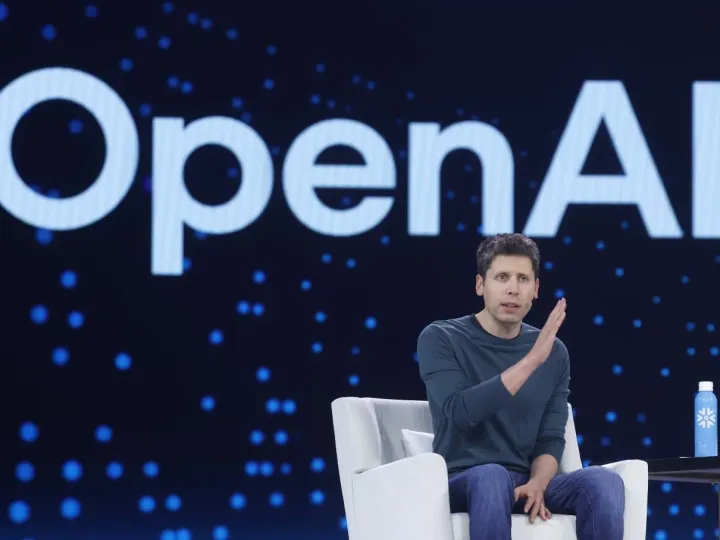
Oracle’s $50 Billion AI Bet Sparks Stock Jump — But Investors Still Aren’t Fully Convinced
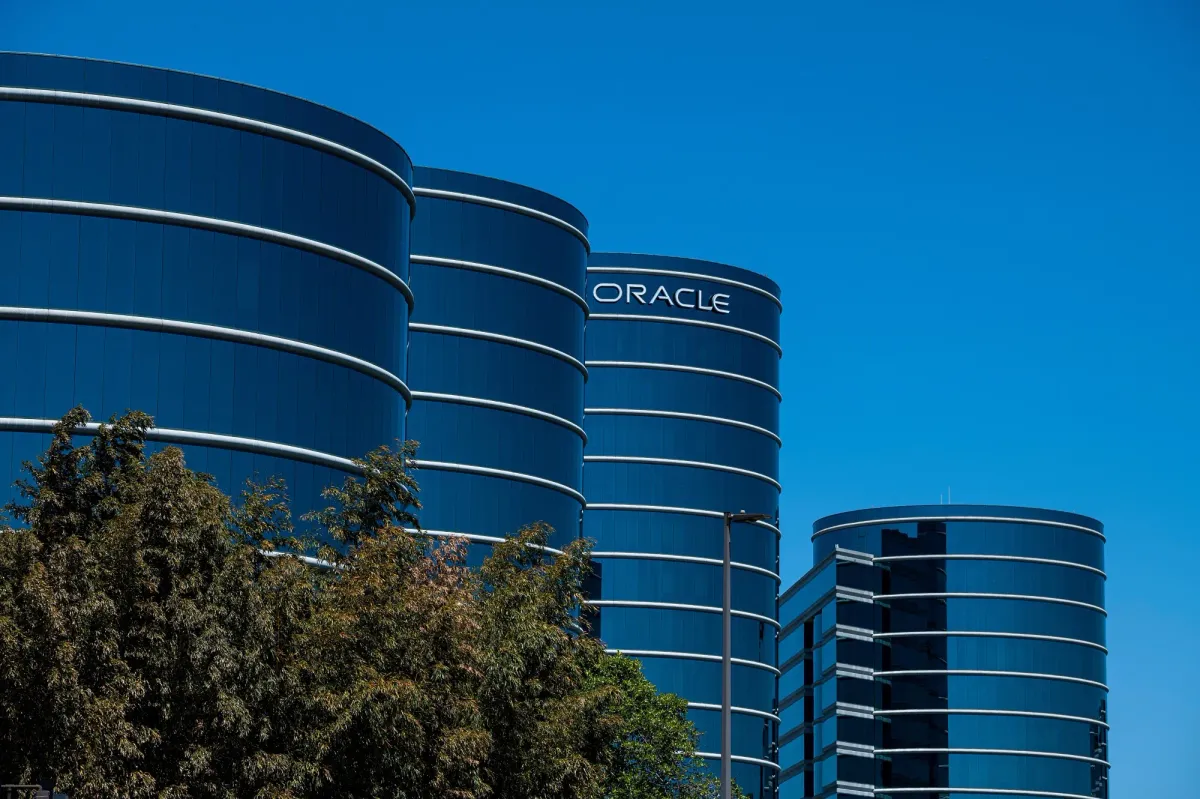
Oracle Shares Rise as Wall Street Backs Its $50 Billion AI Funding Plan
Oracle shares climbed 2% on Monday after analysts said the company’s newly announced $50 billion fundraising plan eases concerns about how it will pay for one of the largest data-center expansions in tech history.
The move is tied directly to Oracle’s growing role in artificial intelligence infrastructure, particularly its massive partnership with OpenAI. While the plan has reassured investors in the short term, questions still linger about long-term profitability, debt levels, and whether the AI boom will deliver the returns many expect.
From Cloud Underdog to AI Infrastructure Power Player
Oracle’s Sudden Rise in the Cloud Market
For years, Oracle was considered a smaller, less dominant player in the cloud-computing market, trailing behind giants like Amazon Web Services, Microsoft Azure, and Google Cloud.
That perception has changed dramatically over the past year.
Oracle has quietly transformed itself into a major provider of computing power, largely thanks to a landmark $300 billion deal with OpenAI. Under this agreement, Oracle supplies the massive data-center capacity needed to train and run advanced AI models.
The deal instantly placed Oracle at the center of the global AI infrastructure race.
Why Investors Started Getting Nervous
A Growing Cash Burn Raises Red Flags
Despite the excitement around AI, investors began to worry about how Oracle would fund the enormous infrastructure required to support OpenAI and other major customers, including Elon Musk’s xAI and Meta.
Those concerns intensified late last year when Oracle reported a cash burn of roughly $10 billion during the first half of its fiscal year. The company’s stock fell more than 15% in 2025 as investors questioned whether Oracle’s balance sheet could handle such aggressive spending.
The fear was simple: AI infrastructure is incredibly expensive, and Oracle appeared to be spending faster than it was generating returns.
The $50 Billion Plan: How Oracle Intends to Pay the Bill
A Mix of Equity and Debt
On Sunday, Oracle announced it expects to raise between $45 billion and $50 billion in calendar year 2026. The funding will come from a combination of stock sales and bond issuance.
The company said up to $20 billion would be raised through selling shares at market prices. The remaining amount would come from bond sales expected to take place early in 2026.
Oracle emphasized that this strategy is designed to preserve its investment-grade credit rating, a key concern for both equity and bond investors.
Why Wall Street Liked the Announcement
A Clear Signal to Rating Agencies
Analysts were quick to respond positively.
Several noted that Oracle is not only saying it wants to maintain an investment-grade rating but is actively structuring its financing to prove it.
By combining equity sales with debt, Oracle reduces the risk of overloading its balance sheet with borrowing. This approach reassured credit markets and rating agencies that the company is taking a disciplined approach to funding its AI expansion.
Barclays analysts said the mix of equity and mandatory convertible instruments should strengthen Oracle’s financial position and lower its future borrowing needs.
Oracle Takes Concrete Steps Toward Fundraising
Filing for Depositary Shares
Oracle disclosed that it has filed to offer up to 100 million depositary shares. These shares represent ownership interests and give the company flexibility in how it raises equity without issuing traditional common stock all at once.
Goldman Sachs is set to lead the bond sale, while Citigroup will oversee the equity and convertible preferred offerings.
These moves added credibility to Oracle’s plan, showing that it is not just theoretical but already in motion.
Bond Markets React Positively
Falling Credit Risk Signals Confidence
Another sign of investor relief came from the credit markets.
Oracle’s credit-default swaps, which act as insurance against the risk of default, fell sharply. Both its five-year and ten-year CDS dropped by about 35 basis points.
This decline suggests bond investors now see Oracle as less risky than they did before the fundraising announcement.
In financial markets, that kind of move often speaks louder than stock price changes.
But Doubts About AI Spending Are Still Lurking
Will the AI Boom Pay Off?
Despite the positive reaction, not all concerns have disappeared.
Across the tech industry, companies are spending hundreds of billions of dollars building AI infrastructure. Yet there is still limited evidence that these investments are producing significant real-world productivity gains.
Some investors worry the industry could be overbuilding, creating more data-center capacity than demand ultimately justifies.
Oracle’s fortunes are now closely tied to OpenAI’s success, which adds another layer of uncertainty.
Competitive Pressure Is Intensifying
OpenAI Faces Strong Rivals
Oracle’s AI strategy also depends on OpenAI staying ahead in a fiercely competitive field.
Recent enthusiasm around Google’s latest AI model and its deal to power AI features on Apple devices have shifted some attention away from OpenAI. That competition could affect how much computing power OpenAI ultimately needs from Oracle.
If demand slows or pricing pressure increases, Oracle’s massive investments could take longer to pay off.
Investors Remain Cautious About the Long Term
“Nervousness Isn’t Going Away”
Some market watchers believe the fundraising plan buys Oracle time, but not certainty.
Analysts at Jefferies warned that the strategy could weigh on margins in the near term. They also said Oracle’s free cash flow is unlikely to turn positive until fiscal year 2029.
Russ Mould, investment director at AJ Bell, noted that Oracle’s growing dependence on OpenAI makes investors uneasy, especially combined with plans to raise as much as $50 billion in a single year.
In short, the pressure is off for now, but the stakes remain high.
Past Issues Still Cast a Shadow
Lawsuits and Credit Scrutiny
Oracle has faced heightened scrutiny in recent months.
A bondholder lawsuit filed earlier this year and last year’s spike in credit-default swap costs have kept investors alert to potential risks. While the new funding plan helps address those concerns, it does not erase them entirely.
Markets will be watching closely to see how efficiently Oracle converts AI infrastructure spending into sustainable revenue.
What Comes Next for Oracle
Oracle’s $50 billion fundraising plan marks a critical turning point.
In the short term, it reassures investors that the company has a clear path to financing its AI ambitions without jeopardizing its credit standing. In the long term, Oracle must prove that its massive bets on AI infrastructure can generate strong returns.
The next few years will determine whether Oracle’s transformation from cloud underdog to AI powerhouse becomes one of the smartest pivots in tech history — or a costly gamble in an overheated market.