
Operational Standstill for Russia’s A-50 Aircraft Fleet Imminent – Sky Bulletin
[ad_1]
In light of recent incidents, Russian A-50 early warning and control aircraft are presumed to have halted their flights in Ukraine. The U.K. Defense Ministry indicated in a March 2 report that this standstill follows the destruction of a second A-50 plane.
Two losses have been sustained by Russia’s Air Force, with one A-50 being brought down in January and a subsequent loss on February 23. These incidents are believed to be the result of Ukrainian offensive actions, with each aircraft valued at approximately $330 million.
The A-50s play a vital role in Ukraine, offering services such as identifying air defense systems, directing missiles, and aiding in the coordination of Russian combat aircraft operations.
After the last alleged incident on Feb. 23, the Ukrainian Air Force Spokesperson Yurii Ihnat mentioned on Feb. 27 that there have been no sightings of A-50 planes.
The U.K. Defense Ministry suggests that Russia will likely keep these aircraft grounded until internal inquiries into the lack of safeguarding for such a vital asset are complete.
Join our community
Support independent journalism in Ukraine. Join us in this fight.
Support us
“The suspension of these aircraft operations creates a substantial capability void in the disputed airspace over eastern and southern Ukraine,” according to the ministry’s standpoint.
Without A-50 support, Russian air crew’s situational awareness will presumably diminish, necessitating increased risk-taking to aid ground forces. The report highlighted this potentiality.
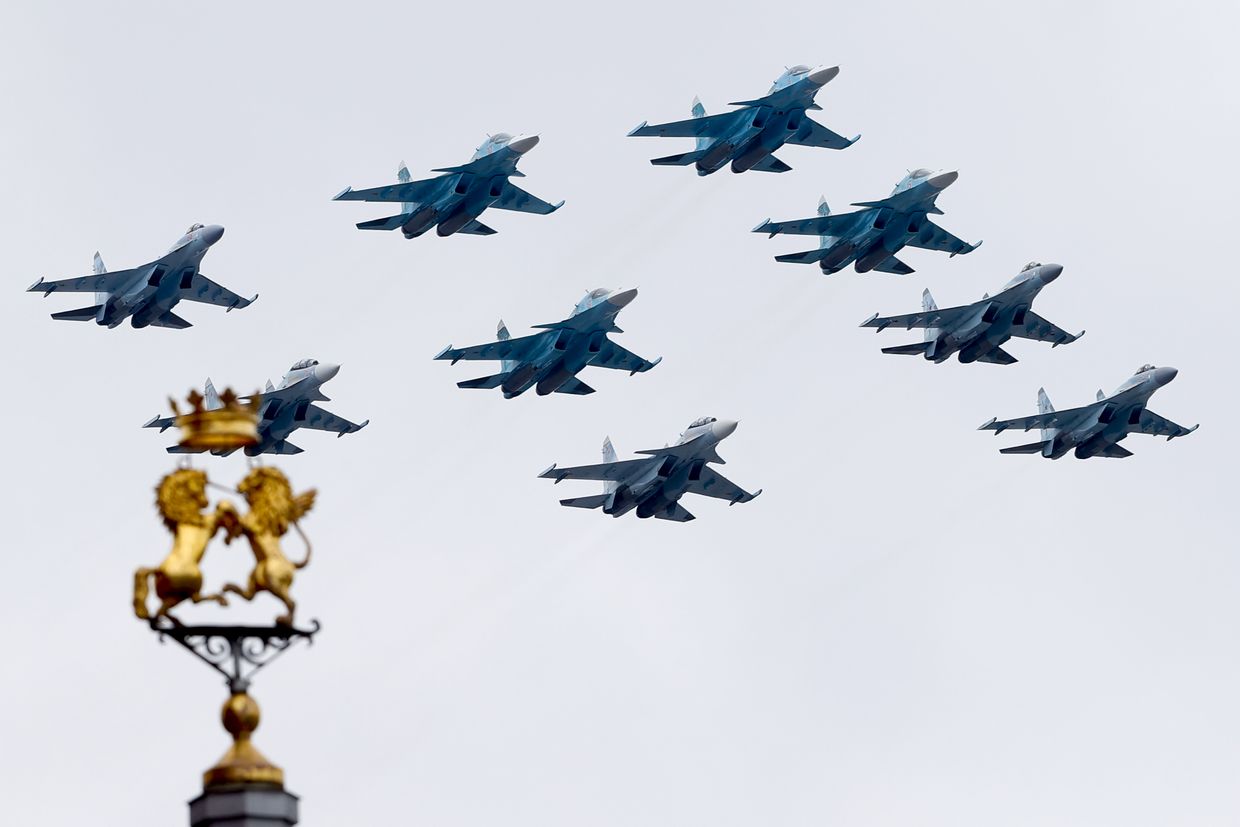
Alongside these events, Russia has reported other significant airpower losses, including ten Su-34 fighter bombers and two Su-35 fighter jets towards the end of February, with an additional Su-34 downed on March 1.
The U.K. Defense Ministry noted that Russia might look to retrofit older A-50 models to alleviate these operational gaps because it is suspected that the operational fleet is minimal. Kyrylo Budanov, the head of Ukraine’s military intelligence, posits that there are only six active A-50 planes in the Russian fleet at present.
Ukraine is successful in targeting 13 Russian military aircraft within a two-week timeframe. What’s the strategy?
The Ukrainian military has claimed the destruction of 13 Russian military aircraft in a fortnight, marking some of the highest counts of Russian Air Force losses since the invasion’s commencement. This tally includes 10 Su-34 fighter bombers, a pair of Su-35 fighter jets, and a rare A-50 military spy plane. Moreover, another A-50 was brought down…
FAQs about Russia’s Grounding of A-50 Aircraft Fleet
Q1. Why has Russia likely grounded its A-50 aircraft?
A1. The grounding follows the downing of two such aircraft, prompting investigations to determine how to better protect this crucial asset.
Q2. How critical are the A-50 aircraft for Russian operations in Ukraine?
A2. The A-50s are instrumental in detecting air defenses and coordinating combat aircraft, thereby playing a pivotal role in supporting ground operations.
Q3. Has Ukraine been effective in downing Russian aircraft recently?
A3. Yes, Ukraine has reported considerable success, with 13 Russian military aircraft, including 10 Su-34 fighter bombers and two Su-35 fighter jets, being downed in the recent weeks.
Q4. What might Russia do to compensate for the loss of A-50 aircraft?
A4. Russia may resort to retrofitting older A-50 models to fill the operational void left by the recent aircraft losses.
Q5. How many operational A-50 planes does the Russian fleet currently possess?
A5. According to Ukraine’s military intelligence, Russia has only six operational A-50 planes at this time.
Conclusion
The recent incidents herald a significant shift in the dynamics of aerial warfare over Ukraine, with the grounding of Russia’s A-50 fleet likely to impact operations. It underscores the vulnerabilities faced by even the most advanced military assets, and the ongoing conflicts dictate a relentless push towards strategic adjustments. The U.K. Defense Ministry’s updates caution a change in the airspace over eastern and southern Ukraine, which could reshape the aerial engagement in the times to come.
Note: Information in this article was synthesized from multiple sources and does not represent original reporting. For reference to the original content, please visit the Kyiv Independent.
[ad_2]