Nvidia CEO Jensen Huang Says Stop Chasing AI Profits Too Soon — His Bold Advice Could Change How Companies Use AI
Why Jensen Huang Thinks Companies Are Rushing AI Results
Artificial intelligence is everywhere right now. Companies across industries are investing heavily in AI tools, hoping to boost productivity, cut costs, and gain a competitive edge. But there’s one big problem: many of these AI projects aren’t delivering immediate results.
Some studies suggest a large percentage of AI pilot programs struggle or fail to show quick returns. That has left executives wondering whether their investments are worth it.
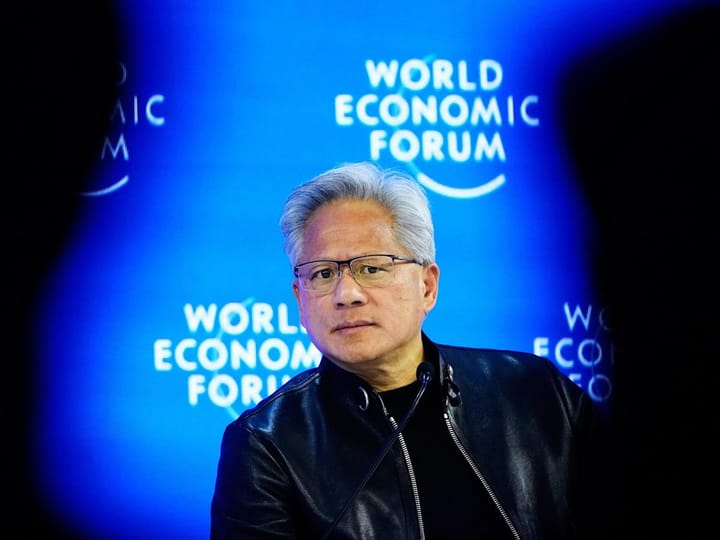
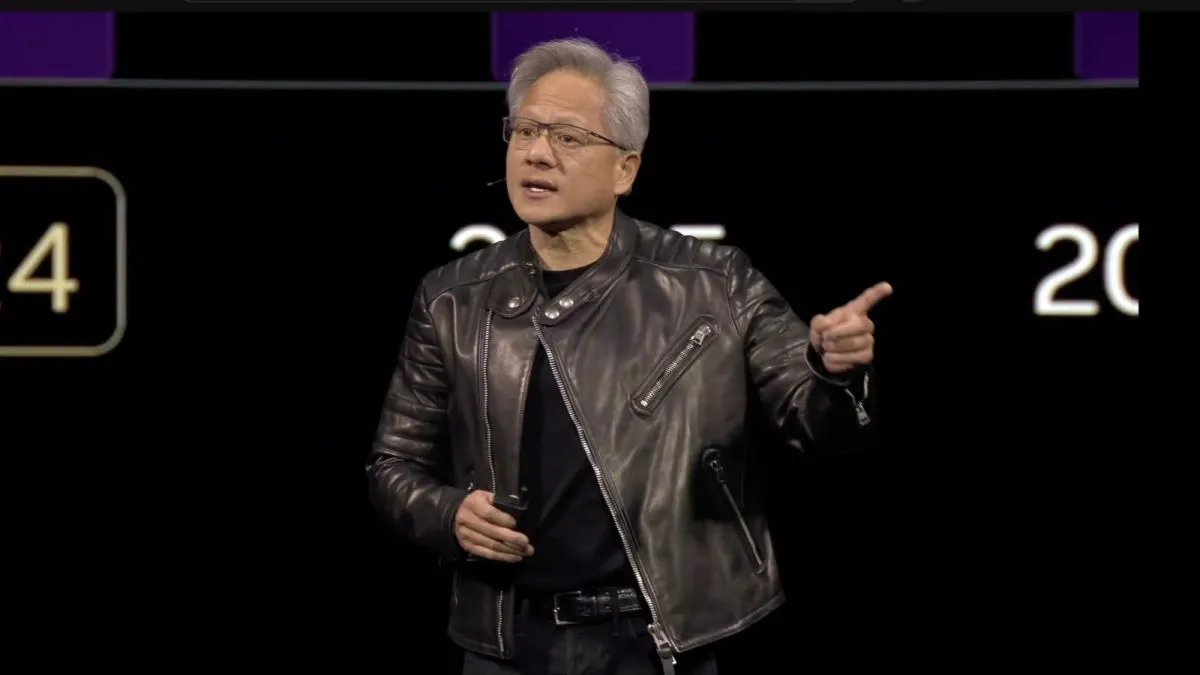
Nvidia CEO Jensen Huang, one of the most influential voices in AI technology, has a very different perspective. Instead of demanding instant financial returns, he believes companies should focus on experimentation, learning, and long-term innovation.
His advice is simple but unconventional: let people explore AI freely without obsessing over return on investment too early.
“Let a Thousand Flowers Bloom”: What Huang Really Means
Encouraging exploration over pressure
Speaking at an AI industry event alongside Cisco CEO Chuck Robbins, Huang shared a philosophy that contrasts sharply with traditional corporate thinking.
He argued that constantly asking about ROI too early can kill creativity. Innovation, especially with a technology as new and fast-moving as AI, rarely follows a straight path.
Huang compared AI experimentation to raising children. When kids want to try a new hobby, parents usually encourage them without demanding proof it will lead to financial success. He believes companies should adopt a similar mindset with AI.
Exploration, curiosity, and trial-and-error can ultimately lead to breakthroughs that rigid planning might miss.
Why Many AI Projects Aren’t Showing Results Yet
AI adoption is still in an early stage
Despite massive hype around artificial intelligence, many organizations are still figuring out how best to use it. Early pilot projects often involve testing, learning, and adjusting rather than generating immediate profits.
Common challenges include:
- Lack of skilled employees who understand AI deeply
- Difficulty integrating AI into existing workflows
- Data privacy and infrastructure issues
- Unrealistic expectations about instant results
Huang suggests that these struggles are normal and shouldn’t discourage companies from continuing to experiment.
Innovation Needs Freedom, Not Tight Control
Creativity often thrives in messy environments
One of Huang’s most striking points is that innovation rarely happens under strict control. In fact, too much oversight can limit creative thinking.
He openly admits that Nvidia itself runs many AI projects simultaneously, some of which may not lead anywhere. But he sees that diversity of experimentation as a strength, not a weakness.
Allowing multiple ideas to develop at once reduces the risk of betting everything on one approach that might fail. It also increases the chances of unexpected breakthroughs.
Leadership should guide, not control
Huang believes executives should influence direction rather than micromanage innovation. Total control, he says, is often an illusion in fast-changing technological environments.
Companies that encourage exploration may discover opportunities they didn’t even know existed.
Why Understanding AI Matters Beyond Just Using It
Don’t rely only on ready-made tools
Another key message from Huang is the importance of hands-on experience with AI technology. Simply renting cloud services or buying finished solutions isn’t enough to truly understand how AI works.
He encourages companies to build some AI capabilities internally. This helps teams understand:
- How AI systems process data
- Where potential risks lie
- How to customize tools effectively
- How to protect valuable company information
This deeper understanding can make a significant difference in long-term success.
Data, Privacy, and the Power of Good Questions
Questions may be more valuable than answers
Huang made an interesting observation about intellectual property. He believes the real value in AI doesn’t always lie in the answers it produces but in the quality of the questions people ask.
AI tools can generate information quickly, but human expertise is still needed to guide them effectively. Domain knowledge, critical thinking, and curiosity remain essential skills.
This perspective shifts the focus from simply using AI to developing the ability to interact with it intelligently.
The Shift From Coding to Intent-Based Computing
A major change in how computers work
Huang describes the current AI revolution as a fundamental reinvention of computing. Traditionally, software required explicit programming: developers wrote detailed code instructing computers exactly what to do.
Now, AI allows users to express their intent in natural language, and the system figures out how to achieve the desired outcome.
This shift means:
- Technical coding skills remain important but are evolving
- Communication and problem-definition skills are becoming more valuable
- Expertise in specific industries plays a bigger role in guiding AI
Essentially, knowing what to ask becomes as important as knowing how to code.
AI in the Loop, Not Just Humans in the Loop
A different way to think about AI integration
There’s a common phrase in AI discussions: humans should stay “in the loop” to oversee automated systems. Huang flips that idea around.
He suggests companies should aim for AI to be embedded in everyday workflows. When AI tools capture insights from daily work, they turn individual experiences into lasting organizational knowledge.
This can help companies:
- Preserve institutional expertise
- Improve decision-making over time
- Enhance productivity across departments
In this sense, AI becomes a collaborative partner rather than just a tool.
Training Employees to Work Effectively With AI
Some organizations are already focusing on practical AI education for their workforce. Training often emphasizes three key steps:
Think carefully about the problem before using AI.
Prompt effectively to guide AI systems.
Check outputs critically instead of assuming accuracy.
This approach highlights that AI literacy isn’t just about technical skills. It also involves judgment, curiosity, and continuous learning.
What This Means for Businesses Today
Long-term thinking is crucial
Companies adopting AI should expect a learning curve. Immediate profits aren’t guaranteed, but early experimentation can build valuable expertise.
Organizations that invest patiently may gain a stronger competitive advantage later.
Culture matters as much as technology
Encouraging curiosity, reducing fear of failure, and supporting experimentation can make a big difference in AI adoption success.
A rigid, results-only mindset may slow innovation.
Final Thoughts
Jensen Huang’s message challenges conventional business thinking. Instead of treating AI purely as a short-term investment with immediate financial returns, he sees it as a transformative technology that requires patience, curiosity, and openness.
By allowing experimentation, building deeper understanding, and focusing on meaningful questions, companies can position themselves for the future of AI-driven innovation.
In a rapidly evolving technological landscape, sometimes the smartest move isn’t chasing quick profits but creating the conditions where innovation can grow naturally.