
Markets Soared Under Trump But This One Factor Could Shake Wall Street Confidence
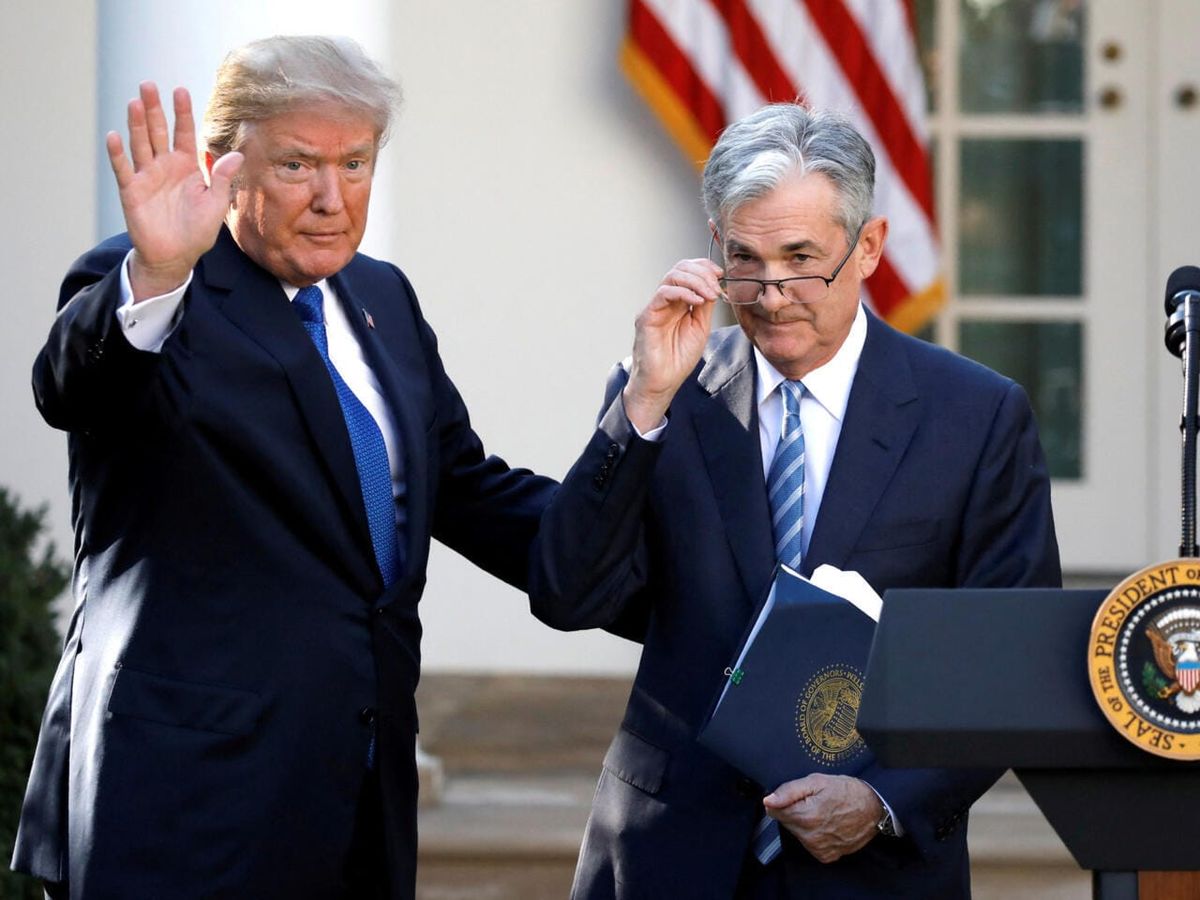
Trump Era Stock Market Rally Continues But Clouds Are Forming
From a purely statistical point of view, Wall Street has generally performed well during Donald Trump’s presidency. The markets have seen strong gains, investor optimism has stayed high, and major indexes have climbed significantly. However, while the rally looks impressive on the surface, there are growing concerns that one powerful institution could disrupt the momentum — the Federal Reserve.
Investors, economists, and market watchers are now closely tracking how economic policy, interest rate decisions, and leadership changes at the central bank might influence the future of stocks.
This mix of strong performance and rising uncertainty makes the current market situation both exciting and slightly uneasy.
How Stocks Have Performed During Trump’s Presidency
Strong Gains During The First Term
During Donald Trump’s first term, the major stock indexes recorded impressive growth. The Dow Jones Industrial Average rose around 57 percent, the S&P 500 climbed about 70 percent, and the tech-heavy Nasdaq Composite surged roughly 142 percent.
These gains did not come without volatility. There were trade tensions, tariff debates, and global economic uncertainties along the way. Yet despite these ups and downs, the overall trend remained upward.
Historically speaking, stock market growth under any president is not unusual. Data covering more than a century shows that most presidential terms have produced positive market returns. Still, Trump’s first term ranked among the stronger periods compared with many past administrations.
Continued Growth After 2025 Inauguration
Since Trump returned to office in January 2025, markets have again moved upward. By early 2026, the Dow, S&P 500, and Nasdaq had climbed roughly 13 percent, 15 percent, and 18 percent respectively.
These numbers suggest that investor confidence remains strong, supported by economic policies, corporate earnings, and enthusiasm around emerging technologies.
Key Factors Driving The Current Bull Market
Tax Policies And Corporate Boost
One major driver often linked to Trump’s economic approach is corporate tax reform. The Tax Cuts and Jobs Act reduced the top corporate tax rate significantly, encouraging companies to invest, expand operations, and return money to shareholders.
A visible outcome has been a surge in share buybacks. Many companies have used profits to repurchase their own shares, which can increase earnings per share and support stock prices.
While critics argue that buybacks don’t always translate into job creation or broader economic benefits, investors typically view them as a positive signal.
America First Economic Strategy
Trump’s trade policies and emphasis on domestic investment have also influenced markets. Although tariffs sometimes created short-term volatility, they encouraged certain industries to invest more heavily within the United States.
For some businesses, this translated into growth opportunities and stronger investor confidence.
Technology Trends Fueling Optimism
Not all market gains can be directly linked to political decisions. Broader technological trends have played a major role.
During Trump’s earlier presidency, blockchain technology generated excitement. More recently, artificial intelligence, quantum computing, and digital infrastructure have captured investor attention. These emerging sectors continue to attract significant capital and drive stock performance.
The Federal Reserve: A Potential Market Headwind
Why The Fed Matters So Much
The Federal Reserve plays a central role in shaping economic conditions. Its primary goals include controlling inflation, supporting employment, and maintaining financial stability.
Interest rate decisions influence borrowing costs, investment activity, mortgage rates, and ultimately stock market valuations. When the Fed signals stability, investors usually feel reassured. When uncertainty appears, markets can react quickly.
Rising Internal Disagreements
Recently, observers have noted unusual divisions within the Federal Open Market Committee, the group responsible for monetary policy decisions.
Several recent meetings have included dissenting votes, sometimes in opposite directions. Some members favored keeping interest rates unchanged while others wanted deeper cuts.
Such divisions are rare and can create uncertainty for investors who rely on clear policy signals.
A lack of consensus may weaken confidence in the central bank’s ability to steer the economy smoothly.
Leadership Changes Could Add Uncertainty
End Of Jerome Powell’s Term
Federal Reserve Chair Jerome Powell’s term is expected to conclude in mid-2026. Leadership transitions at the Fed often bring policy shifts, even if gradual.
President Trump has nominated Kevin Warsh, a former Fed governor, to potentially take over. However, confirmation processes and policy outlook differences could prolong uncertainty.
Concerns About Balance Sheet Strategy
Warsh has previously expressed interest in reducing the Federal Reserve’s massive balance sheet. This could involve selling Treasury bonds held by the Fed.
If large-scale bond sales occur, long-term interest rates might rise. Higher borrowing costs could affect mortgages, business investments, and ultimately stock valuations.
For markets already trading at historically high valuations, even small policy changes could have noticeable effects.
Valuations And Market Sensitivity
Stocks Already Look Expensive
Some analysts point out that the stock market currently trades at historically elevated valuation levels. Metrics like the Shiller price-to-earnings ratio suggest markets are among the priciest seen in more than a century.
High valuations do not guarantee a downturn, but they leave less room for mistakes or unexpected shocks.
If interest rates rise, economic growth slows, or investor sentiment shifts, expensive markets can react sharply.
Why Investors Are Watching Closely
The combination of strong market performance, potential policy shifts, and central bank disagreements creates a delicate balance.
Investors are not necessarily expecting a crash, but many are preparing for increased volatility.
What This Means For Investors
Opportunity Still Exists
Despite concerns, many analysts remain optimistic about long-term growth. Corporate earnings continue to improve, innovation remains strong, and global economic activity is still expanding.
Emerging technologies like artificial intelligence could drive the next phase of market growth.
Caution Is Increasing
At the same time, diversification and risk management are becoming more important. Investors are paying closer attention to interest rate trends, inflation data, and Federal Reserve signals.
Smart investing in uncertain environments often involves balancing optimism with caution.
Looking Ahead
The relationship between politics, economic policy, and financial markets is always complex. While Trump’s presidency has coincided with strong stock performance, many factors beyond political leadership influence market outcomes.
The Federal Reserve’s decisions in the coming months could shape investor sentiment significantly. Leadership changes, policy disagreements, and valuation concerns all add layers of complexity.
For now, markets remain resilient. But as history shows, periods of strong growth often come with hidden risks.
Investors who stay informed, adaptable, and patient are usually best positioned to navigate both the highs and lows of the financial cycle.