Investors Are Dumping the Dollar After an Unusual Fed Intervention
A Rare Fed Signal Sparks a Sharp Fall in the U.S. Dollar
The U.S. dollar has taken an unusually sharp hit, and the reason traces back to a quiet but powerful move by the Federal Reserve.
Late last week, it emerged that the New York Federal Reserve carried out a rare “rate check” with currency traders focused on the dollar versus the Japanese yen. While this may sound technical, the implications were anything but minor.
Markets interpreted the move as a sign that U.S. authorities could be preparing to support Japan’s struggling currency. That interpretation triggered a rapid selloff in the dollar — and investors didn’t wait around for confirmation.
What Is a Fed “Rate Check” and Why It Matters
A Quiet Signal With Loud Consequences
A rate check is not a policy decision. It does not involve interest rate changes or official intervention. Instead, it is a behind-the-scenes inquiry where central banks ask market participants about pricing and liquidity conditions.
Because these checks are rare, especially involving major currency pairs like the dollar and yen, traders treat them as signals rather than routine questions.
In this case, the check was conducted at the request of the U.S. Treasury. That detail mattered. It suggested coordination at the highest levels of U.S. economic policymaking.
Markets Read the Message Loud and Clear
Traders Move Fast When Confidence Wobbles
Once the news spread, currency traders began selling the dollar aggressively.
Over the past five days, the dollar has fallen more than 2.26 percent against a broad basket of global currencies. In a market as large and liquid as the U.S. dollar, that is a steep and unusual drop.
In just one day, the dollar slid another 0.46 percent. At the same time, the Japanese yen surged more than 3 percent against the dollar.
For traders, the takeaway was clear: something had changed.
Japan Feels the Impact Immediately
A Stronger Yen Hits Export Stocks
The ripple effects were felt quickly in Japanese markets.
Japan’s Nikkei 225 stock index dropped 1.79 percent, reflecting concerns that a stronger yen could hurt export-focused companies. When the yen rises, Japanese goods become more expensive overseas, squeezing profit margins.
For investors already nervous about global growth, the sudden currency swing added another layer of uncertainty.
Gold Takes Center Stage as Investors Look for Safety
A New Record and a Clear Message
As the dollar weakened, investors rushed into gold.
The precious metal surged to a new all-time high, breaking above $5,000 per troy ounce. The move reinforced a growing narrative on Wall Street: investors are losing faith in the dollar as the ultimate safe haven.
Gold’s rally was not just about inflation or interest rates. It reflected deeper concerns about political stability, global power shifts, and the reliability of traditional financial anchors.
The Dollar’s Safe-Haven Status Is Being Questioned
A Shift Decades in the Making
For decades, global crises typically strengthened the U.S. dollar. Wars, financial shocks, and geopolitical tensions usually sent investors rushing into U.S. assets.
But that pattern is changing.
According to market strategists, recent episodes of global stress have driven investors toward gold, silver, platinum, and even defense stocks — not the dollar.
The reasons are complex but deeply rooted.
Political Uncertainty Weighs on the Dollar
Markets Are Reassessing Old Assumptions
Analysts argue that political volatility in the United States is slowly eroding the dollar’s privileged status.
The idea that the U.S. is the most stable and predictable anchor in the global financial system no longer feels as secure as it once did. Domestic political tensions, public pressure on institutions, and international skepticism are all feeding into that reassessment.
As a result, when uncertainty rises, investors are diversifying away from the dollar rather than crowding into it.
Gold Is the New Go-To Hedge
A Flight to Tangible Assets
The surge in gold prices reflects more than short-term speculation.
Investors are increasingly treating gold and related metals as protection against systemic risk. Unlike currencies, gold does not depend on political decisions, central bank credibility, or international agreements.
In periods where trust in institutions weakens, tangible assets tend to shine — and gold is leading the charge.
All Eyes Now on the Federal Reserve
A Crucial Week for Markets
With currency markets already on edge, attention is now fully focused on the Federal Reserve’s upcoming interest rate decision.
The Fed is widely expected to keep rates unchanged, holding its benchmark rate in the 3.5 to 3.75 percent range. Market pricing suggests a near-certainty that no rate cut is coming this week.
That means the real drama will unfold not in the decision itself, but in the messaging.
Why Fed Chair Jerome Powell’s Words Matter
Communication Is the Policy Tool
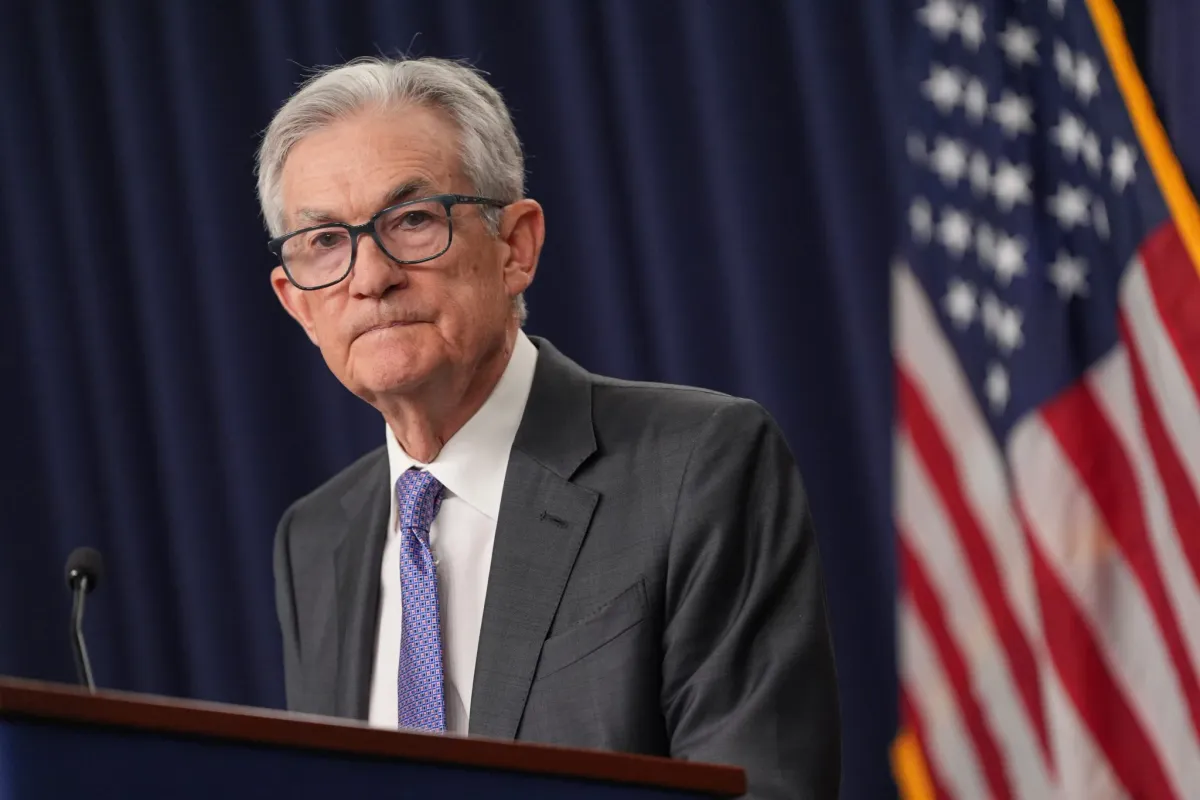
Federal Reserve Chair Jerome Powell’s press conference is expected to be the most closely watched event of the week.
Investors are less interested in what the Fed does and more focused on how Powell explains it. His choice of words, tone, and emphasis will be scrutinized for any hint of future moves or political pressure.
The Fed is under growing pressure to demonstrate independence, especially after repeated public calls from President Trump urging lower interest rates.
Politics and the Fed Are Colliding Again
Independence Under the Microscope
Ironically, political pressure may be making rate cuts less likely, not more.
The Federal Open Market Committee is keenly aware that yielding to public demands could undermine its credibility. As a result, officials may feel compelled to stand firm, even if economic data might otherwise justify a more flexible stance.
That tension is expected to dominate Powell’s remarks — and markets will react in real time.
Stock Markets Show Signs of Caution
A Wait-and-See Mood
Ahead of the Fed decision, equity markets are treading carefully.
U.S. stock futures dipped slightly, while European markets were largely flat. In Asia, losses were more pronounced, reflecting sensitivity to currency moves and global demand concerns.
Investors are clearly waiting for clarity before making big bets.
What This All Means for Investors
Volatility Is Back on the Menu
The sudden drop in the dollar, the surge in gold, and the nervousness in global equities all point to the same conclusion: markets are entering a more volatile phase.
Confidence in long-standing assumptions is being tested. Currency stability, central bank credibility, and geopolitical alignments are all in flux.
For investors, that means risk management is back in focus — and diversification is no longer optional.
The Bigger Picture
The dollar’s recent slide was not caused by a rate hike, a recession signal, or a financial crisis. It was triggered by a subtle signal that markets interpreted as a shift in policy coordination.
That alone says a lot about today’s fragile environment.
When small moves cause big reactions, it’s a sign that confidence is thin — and that the global financial system is searching for new anchors.