
How Hackers Found a Back Door Into the American Living Room
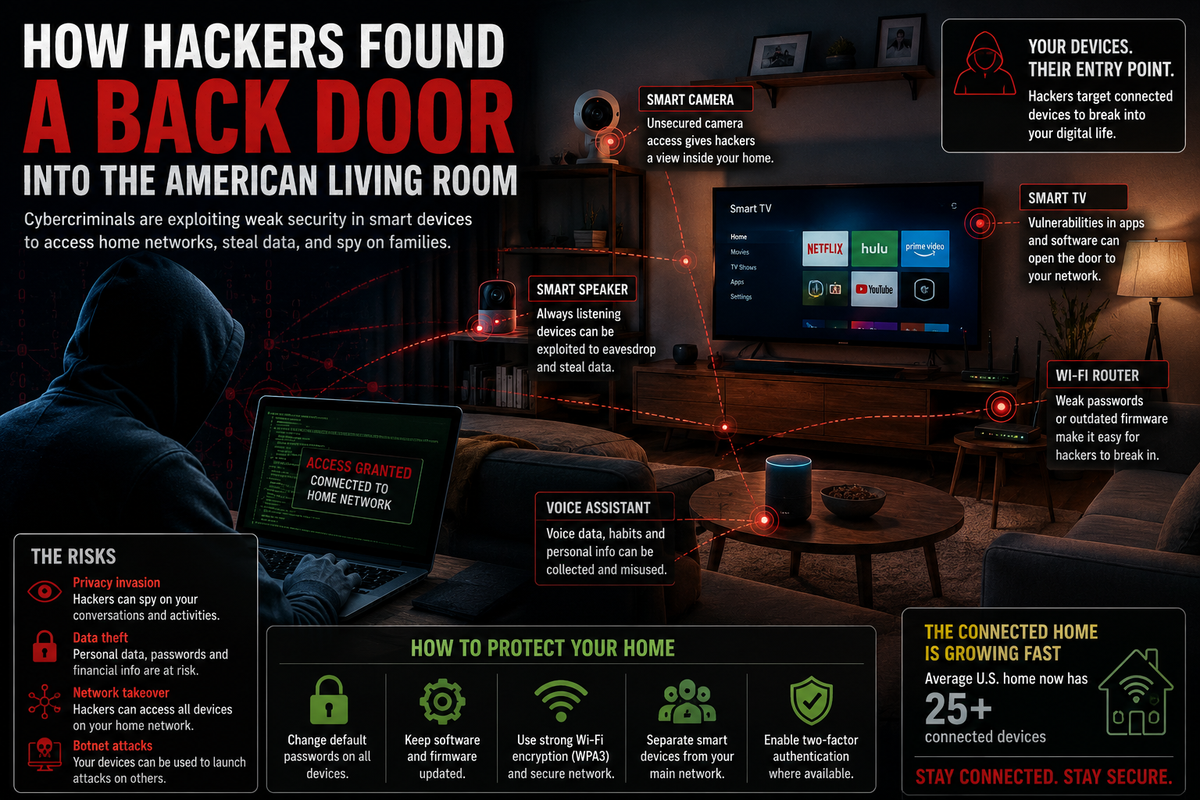
The American living room is now a center of technology. We have televisions, streaming devices, voice assistants, gaming consoles, security cameras and internet-connected appliances. These devices have changed the way we watch entertainment and manage our homes.. Cybersecurity experts are warning us that these devices can be targets for hackers who want to get our personal information and access our home networks.
Many smart devices have weaknesses that hackers can use to get into our systems. Unlike computers and smartphones these devices do not get security updates often. They also do not have cybersecurity protections. So hackers can find weaknesses. Get into our home networks.
Smart televisions and streaming devices are a concern. They have microphones, cameras, internet browsers and applications that can collect our data. Security experts have shown how these devices can be used to get our information watch what we do on our networks or get into other devices in our homes.
Cybersecurity experts say that hackers do not just target our televisions to watch what we are watching. They want to get information about our network setups, our accounts, our passwords and what we do online. Once they get into our home networks they can try to get into our computers, smartphones or financial accounts.
There are now internet-connected devices in our homes. This gives hackers chances to get into our systems. Each device may seem harmless on its own. Together they create a complex system that needs to be managed.
Some devices have been used to create networks of compromised systems. These networks can be used to launch cyberattacks on businesses, government agencies and important infrastructure. Homeowners may not even know that their devices have been compromised because they still work normally.
Manufacturers are trying to make their devices more secure. They are adding security features, automatic updates and better encryption.. Experts say that consumers need to be aware of the risks too. Many weaknesses come from using passwords not updating our software and not installing security updates.
There are also concerns about the amount of data that connected devices collect. Smart televisions and voice assistants collect information about what we watch our search history and our preferences. Companies use this data to improve their services and advertising.. Cybersecurity experts warn that if their systems are breached this data can be valuable to hackers.
To make our homes more secure experts recommend that we change the default passwords on our devices. We should also enable -factor authentication when we can. We need to update our device firmware and secure our Wi-Fi networks with strong encryption. We should also keep our smart-home devices separate from our computers that store information.
The American living room has become a big cybersecurity concern. We need to make sure that we do not sacrifice our privacy and security for convenience and innovation. With connected devices coming online protecting our digital homes will be one of the most important cybersecurity priorities. Smart devices, televisions and smart homes will continue to be a challenge for consumers, manufacturers and regulators. We need to be careful, with devices and protect our personal information and home networks.