Elon Musk Says Retirement Could Become Obsolete as AI and Robots Take Over Jobs
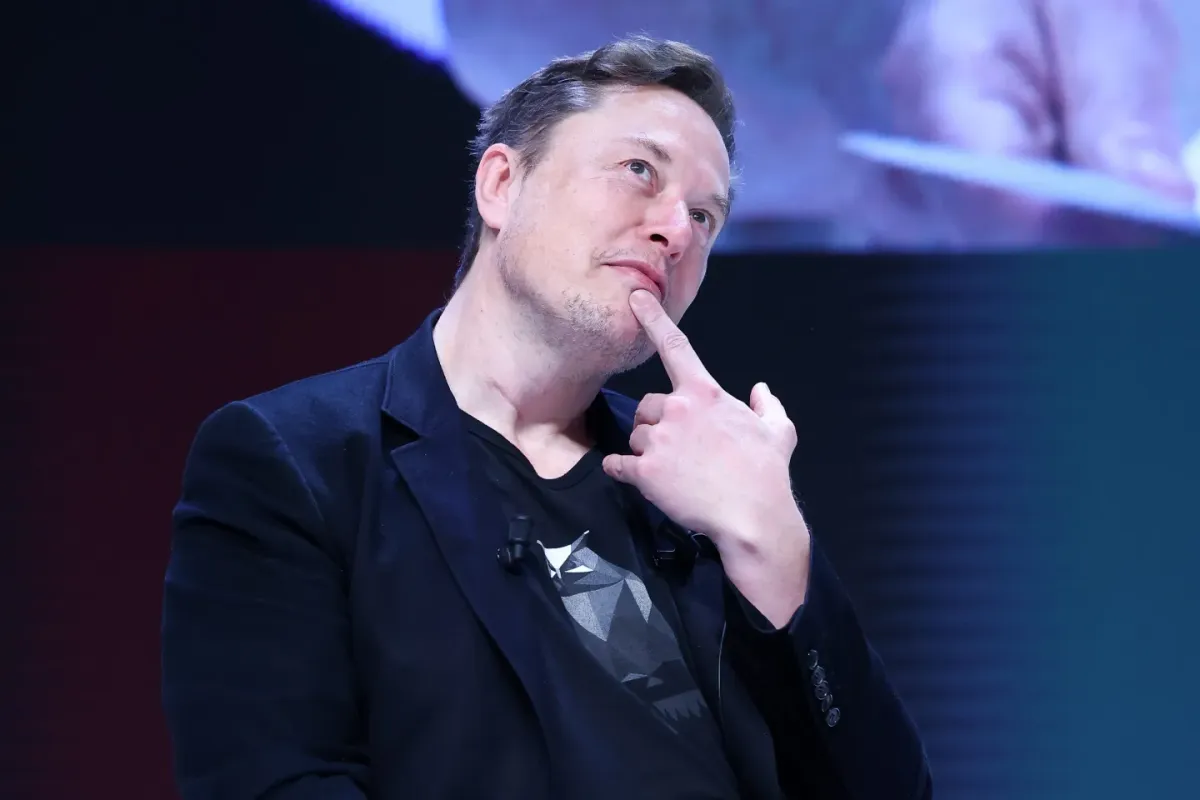
Elon Musk Questions the Future of Retirement
Elon Musk is raising a provocative question: will saving for retirement even make sense in the future? The Tesla and SpaceX CEO ties this idea directly to how fast he believes artificial intelligence (AI) and robotics will transform the labor market.
In a wide-ranging discussion on AI and automation, Musk laid out a timeline that challenges decades of economic assumptions. According to him, the first jobs at risk aren’t physical labor but white-collar positions—lawyers, accountants, analysts, marketers, and coders. Jobs traditionally seen as “safe” because they rely on thinking rather than physical effort are now vulnerable to AI systems that can write, analyze, and problem-solve faster than humans.
AI Hits White-Collar Work First
Musk argues that the first wave of disruption is already underway. AI can perform cognitive tasks at superhuman speed, which means many professional roles may become redundant sooner than most people expect.
He believes this could create a ripple effect across industries. Businesses may rely on AI for decision-making, analysis, and creative work, reducing the need for human employees in roles that once seemed untouchable.
Blue-Collar Jobs Could Follow Quickly
After white-collar roles, Musk predicts blue-collar work will face automation. Humanoid robots combined with advanced AI could replace much of manufacturing, logistics, construction, and even service work within three to seven years.
Unlike past technological revolutions, Musk sees this transition happening extremely fast. Robots and AI could perform the majority of both cognitive and physical labor, creating a world where human work is no longer central to production.
From Job Loss to Abundance
Despite the dramatic nature of this prediction, Musk envisions a positive outcome: abundance.
If AI and robots can produce goods and services at near-zero cost, scarcity could largely disappear. Food, housing, energy, transportation, and manufactured goods could all become dramatically cheaper. Productivity would soar—not because humans are working more, but because machines are doing nearly all the work.
This is where Musk introduces the concept of “universal high income.” Unlike traditional universal basic income, which provides a modest government stipend, Musk’s vision imagines a world where living costs drop so sharply that most people can enjoy a high standard of living regardless of employment.
Why Retirement Might Become Irrelevant
In this context, Musk challenges the very idea of retirement.
“One side recommendation I have,” Musk said, “is don’t worry about squirreling money away for retirement in 10 or 20 years. It won’t matter. You won’t need to save for retirement. If any of the things we’ve said are true, saving for retirement will be irrelevant.”
This statement upends decades of financial planning assumptions. Retirement planning relies on lifelong wage labor, limited productivity growth, and persistent scarcity. But if work itself disappears, Musk argues, the need to “retire” from a job also disappears.
The Risks and Skepticism
Critics note that Musk’s vision depends on a long chain of optimistic assumptions: flawless AI progress, smooth political coordination, equitable distribution of abundance, and a world free from social unrest. History shows technological revolutions rarely unfold perfectly.
Even Musk acknowledges the transition could be volatile. Displacement may occur faster than systems for wealth distribution, forcing governments, institutions, and cultures to catch up with technology.
A Future That Looks Nothing Like Today
Whether or not Musk’s predictions come to pass, his argument forces a critical question: if AI eliminates both white- and blue-collar labor within a decade, the entire framework of work, career planning, pensions, and 401(k)s could become obsolete.
For investors, workers, and policymakers, this raises uncomfortable possibilities. The financial strategies we rely on today may be optimized for a world that no longer exists.
While Musk’s vision remains speculative, it is difficult to dismiss outright. As the CEO of companies leading AI, robotics, and automation, his perspective demands attention. Even partial accuracy in his predictions could reshape how we think about money, work, and retirement.
The Takeaway
Musk is asking society to rethink fundamental assumptions about labor, wealth, and retirement. If AI and robots eventually handle most work, abundance could replace scarcity, and the traditional financial playbook could become irrelevant.
Whether universal high income becomes reality or remains a futuristic idea, Musk’s warning is clear: the future of work—and the future of money—may look nothing like the past.