
France’s Gen Z Has Fallen for a 74-Year-Old Radical Socialist
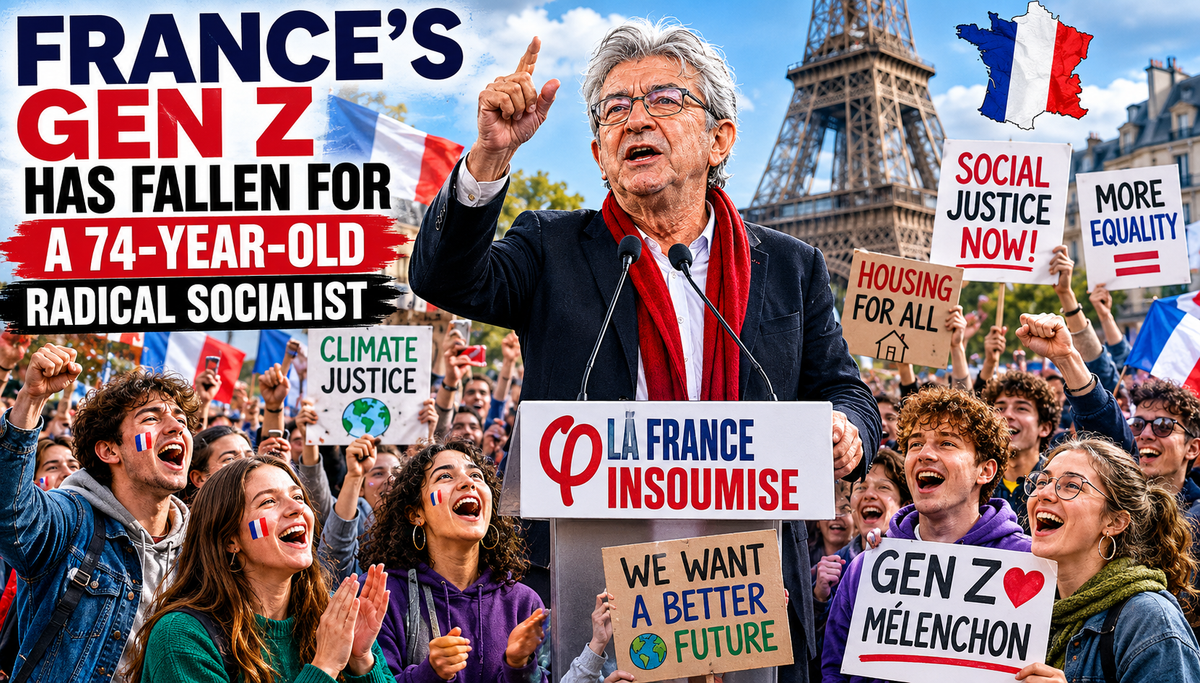
In an era when political movements are increasingly shaped by social media influencers, digital campaigns, and youthful leaders, France presents an unusual political phenomenon. Thousands of Generation Z voters are rallying behind 74-year-old left-wing firebrand Jean-Luc Mélenchon, a veteran politician whose radical socialist ideas have found surprising resonance among the country's youngest voters.
Mélenchon, leader of the left-wing movement La France Insoumise (LFI), has emerged as one of the most influential political figures among French youth despite belonging to a generation far removed from the digital age. Political analysts note that his popularity among Gen Z stems from his ability to connect with issues that matter deeply to young people, including climate change, rising living costs, housing affordability, job insecurity, and social inequality.
Many young French citizens feel increasingly disconnected from traditional political parties. They view mainstream politicians as out of touch with the challenges facing younger generations. Mélenchon has capitalized on this frustration by positioning himself as a fierce opponent of the political establishment and advocating for sweeping economic reforms. His proposals include higher taxes on the wealthy, expanded social welfare programs, stronger labor protections, and significant investments in environmental initiatives.
Social media has played a crucial role in his rise among younger voters. Despite his age, Mélenchon has successfully built a strong online presence through platforms such as TikTok, YouTube, and Instagram. His speeches, interviews, and political commentary regularly generate millions of views, allowing him to communicate directly with younger audiences without relying solely on traditional media outlets.
Political observers say his appeal lies not only in his policies but also in his communication style. Known for his passionate speeches and uncompromising positions, Mélenchon often presents himself as a political outsider willing to challenge powerful institutions. For many young supporters, this authenticity is refreshing in a political landscape often criticized for cautious and scripted messaging.
However, his growing popularity among Gen Z has also sparked debate. Critics argue that some of his proposals are economically unrealistic and could place significant strain on public finances if implemented. Others point to his controversial statements on foreign policy and national issues, which have frequently drawn criticism from opponents across the political spectrum.
Yet for many young voters, these criticisms have done little to diminish his appeal. Instead, they see him as one of the few national leaders willing to address the structural problems affecting their future. Surveys indicate that younger voters increasingly prioritize issues such as economic fairness, environmental sustainability, and social justice, all central themes of Mélenchon's political platform.
The phenomenon highlights a broader shift occurring across Europe, where younger generations are becoming more open to political alternatives outside traditional centrist parties. While many countries have seen youth gravitate toward newer political movements, France's case is particularly notable because the figure attracting young voters is a veteran politician in his seventies.
As France moves closer to the 2027 presidential election, Mélenchon remains one of the country's most influential and polarizing political figures. Whether his support among Gen Z can translate into broader electoral success remains uncertain. What is clear, however, is that age is proving less important than message. In a surprising twist for modern politics, many of France's youngest voters have placed their hopes in a radical socialist who has spent decades challenging the establishment and shows little sign of slowing down.