
Ford’s Massive $19.5B Pivot: Bigger EVs Axed, Hybrids & Battery Storage Take Center Stage
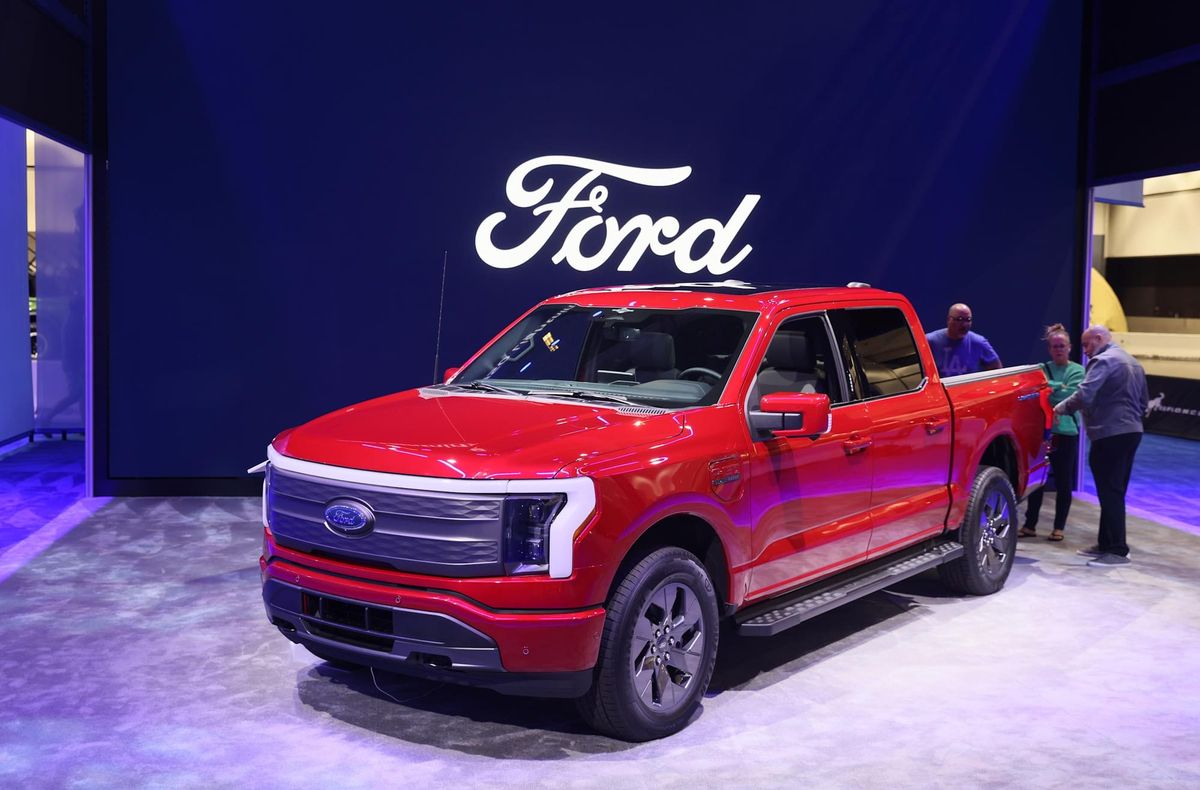
Ford Shakes Up EV Strategy with $19.5 Billion Charge
Ford Motor Company is making a bold pivot in its electric vehicle strategy, taking a $19.5 billion financial charge as it cancels larger EV projects, including the popular F-150 Lightning, and doubles down on smaller EVs, hybrids, and extended-range vehicles.
CEO Jim Farley described the moves as essential for meeting customer demand while ensuring Ford becomes “more profitable,” even though it comes with significant short-term financial pain.
F-150 Lightning and Larger EVs Cancelled
As part of the pivot, Ford is scrapping larger EV models that had been part of its ambitious electrification plan. The iconic F-150 Lightning will no longer be produced in its original scale. Instead, Ford is focusing on smaller, more versatile EVs and hybrid models, as well as vehicles with extended-range electric technology that may appeal to a broader consumer base.
CFO Sherry House confirmed that vehicle cancellations account for $5.5 billion in cash charges, mostly to be paid in 2026, with the remainder in 2027.
Launch of Battery Storage Business
In addition to restructuring its EV lineup, Ford is expanding into battery storage for commercial and residential use. Smaller batteries produced at Ford’s Marshall, Michigan battery plant could serve homes, while commercial customers represent the main growth opportunity.
Ford also restructured its battery joint ventures:
- Ford will fully own and operate two Kentucky battery plants, previously managed in partnership with SK On.
- SK On will take full control of a Tennessee battery plant that was part of the same joint venture.
This move allows Ford greater control over its battery supply chain, critical for its new focus on smaller EVs and hybrids.
Financial Impact of the Pivot
The strategy shift comes at a high cost:
- $19.5 billion in special items, with $12.5 billion in Q4 2025 and $7 billion spread across 2026-2027.
- $8 billion of the writedown comes from asset impairments, including EV asset write-offs and restructuring costs related to the Kentucky battery plants acquisition.
Despite the large charges, Ford raised its 2025 adjusted EBIT guidance to $7 billion, up from $6-6.5 billion, citing underlying business strength and cost improvements.
The company also reaffirmed adjusted free cash flow guidance of $2-3 billion, signaling confidence in its long-term profitability despite the short-term upheaval.
Why Ford Is Betting on Smaller EVs and Hybrids
Ford’s pivot reflects a broader market reality: consumers and commercial buyers are showing more interest in smaller, versatile EVs and hybrids rather than massive battery-electric trucks.
The strategy also aligns with shifting U.S. regulations, as previous government plans for looser fuel efficiency standards may favor hybrids and smaller EVs over full-size electrics.
Farley emphasized that while these changes come with “special charges,” they are essential to position Ford for long-term success in the electrified automotive landscape.
What’s Next for Ford
Ford’s EV strategy overhaul is just the beginning:
- Focus on smaller EVs, hybrids, and extended-range models
- Full control of strategic battery plants to stabilize supply chains
- Launch of residential and commercial battery storage solutions
By pivoting away from high-cost EV trucks and towards more scalable solutions, Ford is aiming to balance innovation with profitability, setting the stage for the next generation of hybrid and electric vehicles.