Elon Musk Plans Massive Tesla AI Chip Factory, Hints at Potential Intel Partnership
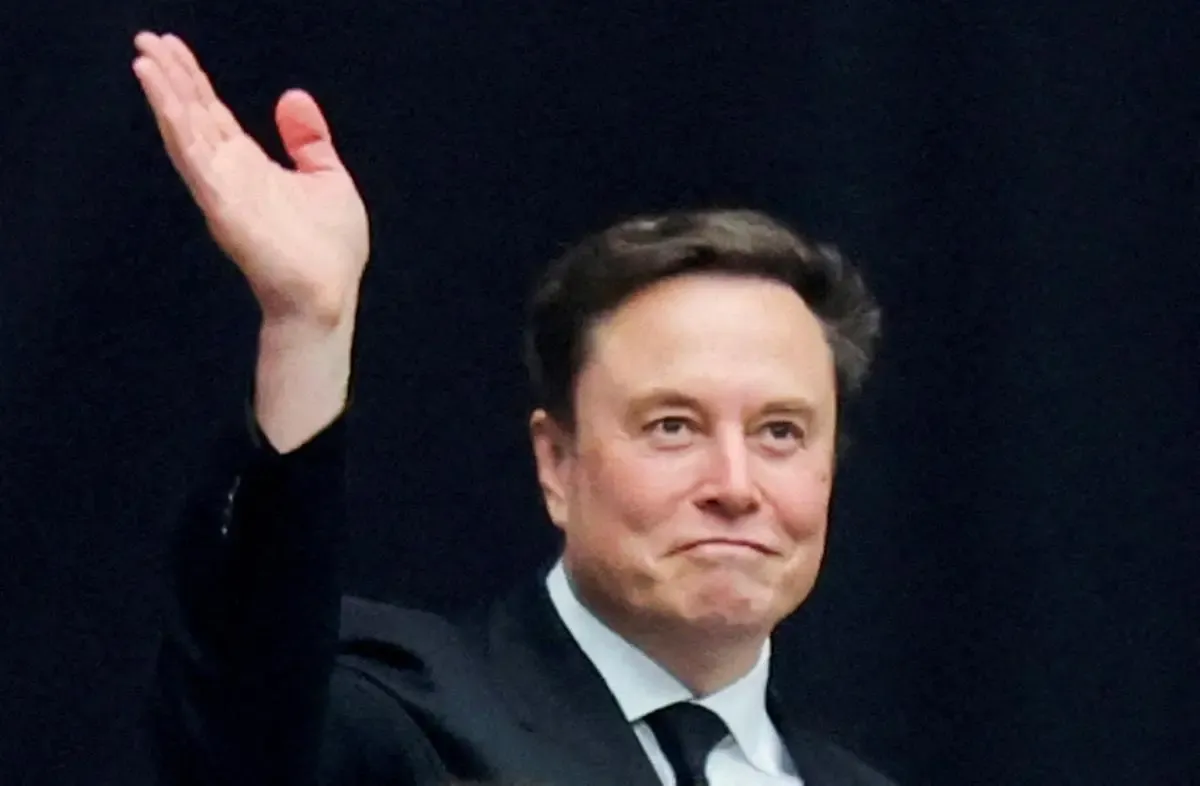
Elon Musk’s Next Big Bet: A “Gigantic” AI Chip Fab
Elon Musk has revealed yet another ambitious plan for Tesla — building what he calls a “gigantic chip fab” to produce artificial intelligence chips. During Tesla’s annual shareholder meeting on Thursday, Musk said the company is designing its fifth-generation AI chip, dubbed AI5, to power Tesla’s next wave of autonomous and robotics technologies.
The billionaire hinted that Tesla may collaborate with Intel, the long-struggling U.S. chipmaker, for this bold venture. “You know, maybe we’ll do something with Intel,” Musk said to a cheering crowd. “We haven’t signed any deal, but it’s probably worth having discussions.”
Why Tesla Might Partner With Intel
Intel, once a semiconductor giant, has lagged behind Nvidia in the AI chip race. But it still has one major advantage: its own chipmaking factories. Recently, the U.S. government took a 10% stake in Intel, signaling confidence in its manufacturing capabilities.
A partnership with Tesla could be a lifeline for Intel, which has been looking for external customers for its latest process technology. Investors seemed to agree — Intel’s stock rose 3% in premarket trading Friday following Musk’s comments.
While Intel declined to comment, Musk’s remarks have sparked speculation about what such a collaboration might look like.
Inside Tesla’s AI Chip Ambitions
Tesla is already a serious player in chip design. Its current AI4 chip powers the company’s self-driving and robotics platforms, including the Full Self-Driving (FSD) software. But Musk says demand for computing power far exceeds what suppliers like TSMC and Samsung can currently provide.
“Even when we extrapolate the best-case scenario for chip production from our suppliers, it’s still not enough,” Musk said. “So I think we may have to do a Tesla terafab. It’s like giga but way bigger. I can’t see any other way to get to the volume of chips that we’re looking for.”
He described the new factory as one capable of producing at least 100,000 wafer starts per month — a massive output even by industry standards.
Tesla AI5 and AI6: The Next Generation of Chips
Musk confirmed that AI5 chips will enter limited production in 2026, with full-scale manufacturing expected in 2027. The next iteration, AI6, will reportedly use the same fabrication facilities but deliver roughly double the performance, with high-volume output projected for mid-2028.
In an X (formerly Twitter) post earlier this week, Musk said the AI6 chip will deliver massive performance gains while maintaining energy efficiency — a crucial factor as Tesla expands its AI-driven initiatives, from autonomous vehicles to humanoid robots.
Building the Tesla “Terafab”
While Musk didn’t share specific details about where or when the facility would be built, his vision is clear — a mega-scale semiconductor factory that can rival the world’s largest chip foundries.
“This fab would be optimized for Tesla’s own AI systems,” Musk said, explaining that the chip would be “inexpensive, power-efficient, and purpose-built for our software.”
He estimated that Tesla’s AI chips could consume just one-third the power of Nvidia’s Blackwell chips while costing only 10% as much to produce. If successful, this could position Tesla not just as an EV company, but as a major force in the AI hardware market.
Tesla’s Transformation Into an AI Powerhouse
Musk’s announcement came on the same day that Tesla shareholders approved his $1 trillion pay package — a symbolic win that reaffirmed investor faith in his vision to transform Tesla from a car manufacturer into an AI and robotics juggernaut.
Tesla’s growing focus on AI chips aligns with Musk’s larger strategy of vertical integration — building as much as possible in-house. By controlling chip production, Tesla would not only secure a reliable supply chain but also gain an edge in optimizing its AI systems for self-driving and robotics applications.
What This Means for the Chip Industry
If Tesla does move forward with its own chip fabrication plant, it could disrupt the semiconductor landscape in a major way. The company would join a small elite group capable of designing and manufacturing advanced AI chips at scale.
A collaboration with Intel could also give both companies what they need — Tesla gets manufacturing muscle, while Intel gains a prestigious, fast-growing customer that could help it regain relevance in the AI race.
Meanwhile, competitors like Nvidia, AMD, and even TSMC will be watching closely. Tesla’s potential entry into large-scale chip fabrication could push other automakers and AI firms to rethink their own hardware strategies.
The Road Ahead
For now, the Tesla “terafab” remains an idea rather than a construction site. Musk is known for making ambitious promises that sometimes take years to materialize. However, his track record of turning bold visions into reality — from reusable rockets to mass-market EVs — suggests that his chip dreams may not be far-fetched.
With the AI5 and AI6 chips on the horizon and talk of partnerships with both Intel and established chipmakers like TSMC and Samsung, Tesla appears to be positioning itself at the intersection of AI, energy, and autonomy.
If Musk’s “terafab” comes to life, it could mark the beginning of a new era — one where Tesla isn’t just building cars, but building the brains that drive the future of intelligent machines.