Elon Musk Is Building One Super Company for Space and AI — And It’s Bigger Than Anyone Expected
Elon Musk Is Merging Space and AI Into One Giant Vision
Elon Musk is once again reshaping the future — and this time, he’s doing it by merging space exploration and artificial intelligence into a single powerhouse company.
Ahead of what is expected to be a massive initial public offering later this year, Musk has combined his rocket company SpaceX with his artificial intelligence startup xAI. The move brings together some of his most influential projects under one roof and signals a bold new direction for both industries.
The deal aims to position Musk at the center of two of the world’s most important technological races: space exploration and artificial intelligence.
What the SpaceX–xAI Deal Means
One Company, Many Musk Projects
SpaceX announced on Monday that it has officially acquired xAI. While financial details were not made public, the goal behind the deal is clear: to build a single company capable of dominating both AI development and space infrastructure.
The merger brings together several major Musk-led platforms, including:
- Grok, the AI chatbot created as a rival to ChatGPT
- Starlink, SpaceX’s satellite-based internet network
- X, the social media platform formerly known as Twitter
By combining these technologies, Musk is creating an ecosystem where data, computing power, satellites, and AI models can all work together seamlessly.
Musk’s Big Idea: AI Data Centers in Space
Why Move AI Off Earth?
One of the biggest challenges in artificial intelligence today is cost. AI systems require enormous amounts of electricity, computing hardware, cooling systems, and land. Data centers are expensive to build and increasingly face opposition from local communities due to energy use and environmental concerns.
Musk believes the solution lies above Earth.
He has repeatedly argued that the future of large-scale AI computing will happen in space, where solar power is constant and land constraints disappear.
In announcing the merger, Musk wrote that in the long term, space-based AI is the only way to truly scale. He added a characteristically simple explanation: it’s always sunny in space.
How Soon Could Space-Based AI Become Reality?
Musk’s Bold Timeline
Musk believes that within two to three years, generating AI computing power in space could become cheaper than doing it on Earth.
That is a dramatic claim, and one that sets Musk apart from much of the tech industry.
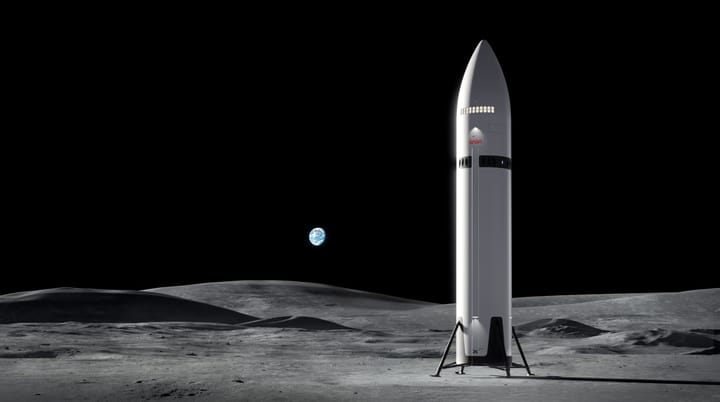
The idea involves launching solar-powered satellites equipped with AI chips that can process data directly in orbit, reducing reliance on Earth-based infrastructure.
If successful, this approach could dramatically lower energy costs and open up new possibilities for AI development.
Not Everyone Is Convinced
Industry Skepticism Remains
While Musk is confident, many experts and rival companies remain cautious.
Microsoft president Brad Smith has publicly questioned whether companies will realistically move data centers into low-Earth orbit anytime soon. He has suggested that building on land, despite challenges, will remain more practical for most companies.
Still, Musk is not alone in exploring the idea. Google is reportedly working on a research initiative known as Project Suncatcher, which involves solar-powered satellites with onboard AI computing. A prototype could launch as early as next year.
The race to take AI beyond Earth has quietly begun.
A Crowded and Competitive AI Battlefield
Musk vs His Former Allies
Musk’s push into AI is also deeply personal.
He helped co-found OpenAI more than a decade ago but later distanced himself from the company. His dissatisfaction with OpenAI’s direction played a major role in his decision to launch xAI in 2023.
Since then, Musk has been racing to catch up with AI leaders like OpenAI, Google, Meta, and Anthropic. Grok, xAI’s chatbot, is positioned as a more outspoken and real-time alternative to existing AI tools.
The SpaceX merger gives xAI access to far greater resources — and a unique advantage in infrastructure that competitors cannot easily match.
Tesla’s Role in Musk’s AI Strategy
Beyond Cars
Artificial intelligence is also central to Musk’s plans for Tesla.
As electric vehicle sales slow, Musk has been shifting Tesla’s focus toward autonomous driving, robotaxis, and humanoid robots — all of which depend heavily on AI.
Recently, Tesla announced a $2 billion investment in xAI, further tying Musk’s companies together. The SpaceX-xAI merger strengthens that network even more, allowing AI breakthroughs to potentially flow across Tesla, SpaceX, and other Musk ventures.
Musk’s History of Merging His Companies
A Familiar Strategy
This is not the first time Musk has combined his businesses.
In 2016, Tesla acquired SolarCity, a solar energy company Musk had helped create. More recently, xAI acquired his social media platform X, giving the AI startup access to massive amounts of real-time data.
Investors have increasingly speculated that Musk could eventually merge even more of his companies into a single mega-corporation. Some have even floated the idea of Tesla and SpaceX combining one day.
Whether that happens or not, the trend toward consolidation is clear.
Wall Street Buzz and Political Ties
Investors Are Paying Attention
Musk’s growing web of companies has drawn intense interest from investors.
Among the outside investors involved is a fund called 1789 Capital, which includes President Donald Trump’s son, Don Jr., as a partner. The firm has invested more than $1 billion across Musk’s companies over the past year, including SpaceX, xAI, and X.
Some of those investments have already been partially sold, but the connections highlight the scale and influence of Musk’s expanding empire.
Expanding AI on Earth Too
Massive Data Centers Still Coming
Despite his focus on space, Musk is not abandoning Earth-based AI infrastructure.
xAI is rapidly expanding its data center footprint in the United States. Mississippi officials recently announced that the company plans to spend $20 billion on a massive new data center near the Tennessee border.
The facility, called MACROHARDRR, will be xAI’s third data center in the greater Memphis area and reflects Musk’s urgency to scale AI capabilities as fast as possible.
The Bigger Goal: Humanity’s Survival
Why Space Still Matters to Musk
Beyond business and technology, Musk has long been driven by a broader mission.
He believes humanity must become a multi-planet species to survive long-term threats — whether from natural disasters, climate change, or human conflict.
At a recent global forum, Musk described humanity as a small candle of consciousness in a vast darkness, fragile and easily extinguished.
In his view, combining AI and space exploration is not just about profit. It is about ensuring that human intelligence, creativity, and consciousness can survive beyond Earth.
Final Thoughts
Elon Musk’s decision to merge SpaceX and xAI is one of the boldest steps yet in his long history of ambitious moves.
By uniting rockets, satellites, artificial intelligence, and social platforms, Musk is building a company designed to operate at planetary — and eventually interplanetary — scale.
Whether space-based AI becomes reality in a few years or remains a longer-term dream, one thing is certain: Musk is not waiting for the future to arrive. He is trying to build it himself.