
Electric Vehicle Slowdown Costs GM Billions as US Policies Shift
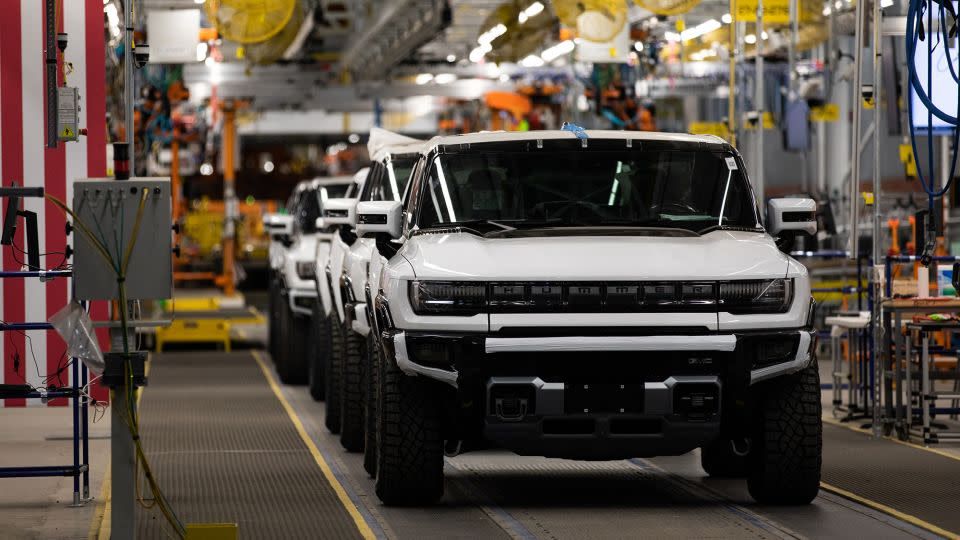
GM Faces a $6 Billion Shock as Electric Vehicle Momentum Slows
General Motors is facing one of its biggest financial setbacks in years, announcing it will record charges of nearly $6 billion after electric vehicle sales failed to meet expectations. The slowdown comes after the United States rolled back tax incentives for EV buyers and eased auto emissions standards, making electric cars less attractive for many consumers.
The news sent GM shares down nearly 3 percent on Friday, reflecting investor concerns about the future of the company’s once-ambitious electric vehicle strategy.
What Triggered the Massive Write-Off?
End of EV Tax Incentives Hits Demand
One of the biggest reasons behind GM’s losses is the end of federal tax credits for electric vehicles. Until September, buyers could claim up to $7,500 in tax credits for new EVs and up to $4,000 for used electric vehicles.
Once those incentives disappeared, demand cooled noticeably. For many buyers, especially those on the fence about switching from petrol or diesel cars, the tax credit made a significant difference in affordability.
Without that support, EV sales across the industry slowed, forcing automakers like GM to reassess production plans, investments, and long-term goals.
Relaxed Emissions Rules Add to the Pressure
Alongside the removal of tax incentives, the easing of auto emissions standards also played a role. With less regulatory pressure to cut emissions quickly, both manufacturers and consumers felt less urgency to shift fully toward electric vehicles.
This policy shift has created uncertainty, particularly for companies that had planned aggressive transitions away from internal combustion engines.
Breaking Down the $6 Billion Charge
What the Filing Reveals
In a filing with the Securities and Exchange Commission, GM explained that the $6 billion charge includes several components. About $1.8 billion consists of non-cash impairments and other accounting adjustments, meaning money is not directly leaving the company but assets are being written down in value.
The remaining $4.2 billion relates to supplier settlements, contract cancellation fees, and other costs tied to scaling back or reworking electric vehicle plans.
This charge follows a similar announcement in October, when GM revealed a $1.6 billion charge for the previous quarter due to the same challenges.
A Sign of Broader Industry Pain
GM is not alone in facing these issues. Automakers across the world are being forced to rethink ambitious EV strategies as customer demand proves more uneven than expected and government policies shift.
What once seemed like a straight path to full electrification now looks more complex and uncertain.
GM’s Bold EV Vision and How It Changed
The Big Bet Announced in 2020
Back in 2020, GM positioned itself as one of the most aggressive EV adopters in the US auto industry. The company announced plans to invest $27 billion in electric and autonomous vehicles over five years, a 35 percent increase from earlier plans.
At the time, GM said more than half of its factories in North America and China would be capable of producing electric vehicles by 2030. It also committed nearly $750 million to expanding EV charging infrastructure through 2025.
The company set ambitious targets, aiming to make the vast majority of its vehicles electric by 2035 and to become carbon neutral by 2040.
Reality Sets In
Those goals now look far more difficult to achieve. Slower consumer adoption, high EV prices, charging concerns, and policy uncertainty have all combined to weaken momentum.
The sharp contrast between the Biden administration’s push for clean energy and the Trump administration’s focus on easing regulations has further complicated long-term planning for automakers.
Global Competition Adds More Pressure
China’s EV Dominance
While US automakers struggle to balance ambition with reality, China has surged ahead in electric vehicle production. Chinese factories are producing millions of EVs each year, supported by extensive charging networks and strong domestic demand.
Earlier this month, Tesla lost its position as the world’s largest EV maker to China’s BYD, which produced 2.26 million electric vehicles last year.
This global shift has intensified competition and put additional strain on US manufacturers trying to keep pace.
Europe and Other Markets Adjust Too
The slowdown is not limited to GM. Stellantis, the Netherlands-based automaker that owns brands such as Jeep, Dodge, and Chrysler, announced it will phase out plug-in hybrid programs in North America starting with the 2026 model year.
The company cited changing customer demand and said it will instead focus on other electrified solutions that are more competitive in the current market.
What This Means for the Future of EVs in the US
EVs Are Still the Future, But the Timeline Is Changing
Despite the setbacks, electric vehicles are unlikely to disappear. Most automakers still believe EVs are the long-term future of transportation, driven by technology improvements and environmental concerns.
However, the pace of the transition is clearly slowing. Instead of a rapid and full-scale shift, companies may now take a more gradual approach, balancing electric, hybrid, and traditional vehicles.
Consumers Are More Cautious
High upfront costs, concerns about charging infrastructure, and uncertainty about resale value continue to hold back many buyers. Without strong incentives, EVs remain out of reach for a large segment of the market.
Until prices fall or infrastructure improves significantly, demand is likely to remain uneven.
Investor Concerns and Market Reaction
Why GM Shares Fell
The nearly 3 percent drop in GM shares reflects worries that the company may have moved too quickly into electric vehicles without sufficient demand to support its investments.
Investors are also watching closely to see whether further write-downs or strategic shifts could follow in the coming quarters.
A Turning Point for Strategy
For GM, this moment may mark a turning point. The company is likely to prioritize flexibility, allowing it to adjust production based on demand rather than sticking rigidly to earlier targets.
This could mean slower EV rollouts, more emphasis on hybrids, or renewed investment in traditional vehicles alongside electric models.
The Bigger Picture for the Auto Industry
From Hype to Hard Choices
The electric vehicle boom was once fueled by optimism, incentives, and bold promises. Now, the industry is entering a phase of hard choices, where economics, consumer behavior, and policy realities matter more than vision alone.
GM’s $6 billion charge is one of the clearest signs yet that the transition will not be smooth or uniform.
What Comes Next
Automakers will likely push for more stable and predictable policies to support long-term planning. At the same time, they will need to innovate to make EVs more affordable and appealing without heavy government support.
The next few years will determine whether electric vehicles regain momentum or continue to face a slower, more cautious rollout.
A Wake-Up Call for EV Ambitions
General Motors’ massive write-down highlights the growing gap between electric vehicle ambition and market reality. While EVs remain a key part of the future, the road ahead is proving more challenging than many expected.
For GM and the wider auto industry, the focus is shifting from rapid transformation to careful recalibration, as companies navigate changing policies, global competition, and cautious consumers.