China and Russia Compete for Influence Over North Korea Amid Shifting Global Dynamics
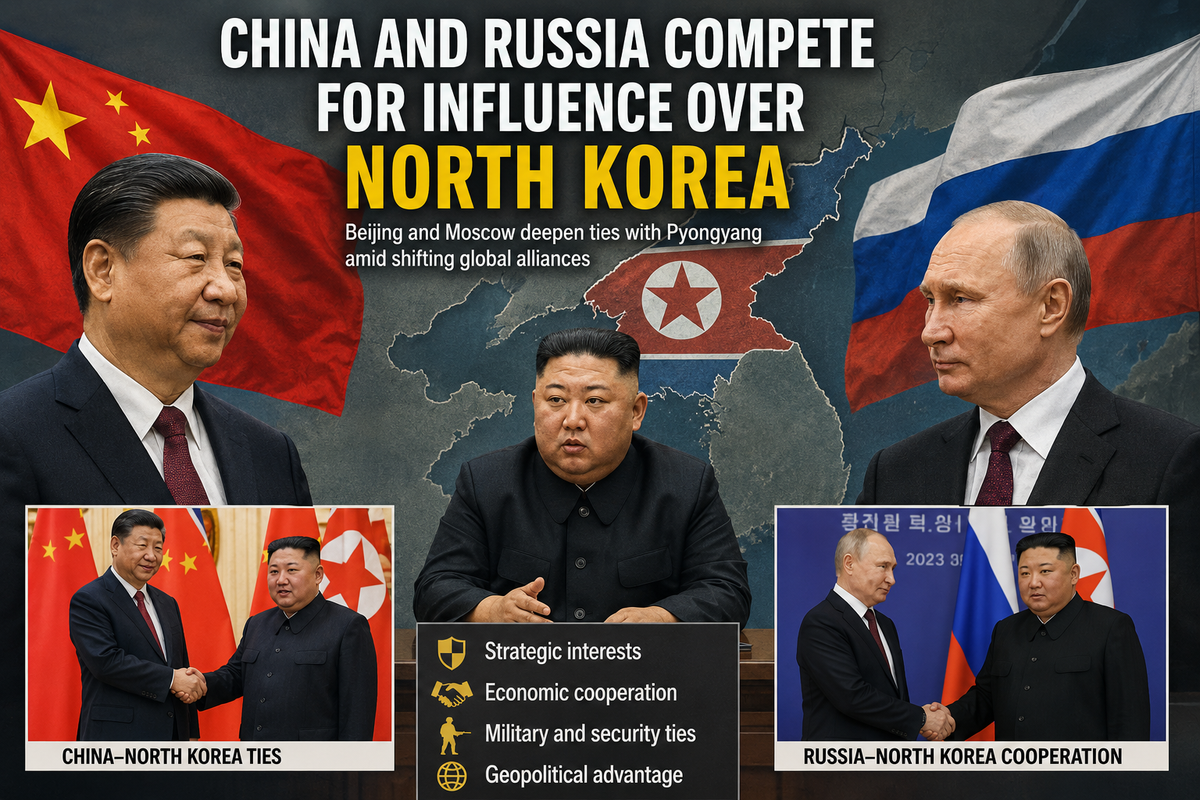
As geopolitical tensions continue to reshape international alliances, China and Russia are increasingly competing for influence over North Korea, a strategically important nation that sits at the crossroads of Northeast Asian security. While both Beijing and Moscow maintain friendly relations with Pyongyang, analysts say their growing engagement reflects a broader contest for regional influence and political leverage.
For decades, China has been North Korea's most important economic and diplomatic partner. Beijing provides critical trade, food supplies, fuel, and investment that help sustain the North Korean economy. The two countries share a long border and historical ties dating back to the Korean War, making China the dominant external influence in Pyongyang for much of the past several decades.
However, Russia has significantly expanded its outreach to North Korea in recent years. Following heightened tensions with Western countries and the imposition of international sanctions, Moscow has sought to strengthen relationships with non-Western partners. North Korea has emerged as a key component of Russia's strategy to build alternative diplomatic and economic networks.
Observers note that Russia's relationship with North Korea has become increasingly visible through high-level meetings, military cooperation discussions, infrastructure projects, and trade agreements. These developments have elevated Moscow's profile in Pyongyang and reduced North Korea's dependence on China alone.
North Korean leader Kim Jong Un has strategically leveraged these relationships to expand his country's diplomatic options. By maintaining strong ties with both China and Russia, Pyongyang gains greater flexibility in negotiations and reduces the risk of becoming overly reliant on a single partner.
China, meanwhile, remains cautious about preserving stability on the Korean Peninsula. Beijing's primary concerns include preventing regional conflict, avoiding a refugee crisis along its border, and ensuring that North Korea remains a strategic buffer between China and U.S.-allied South Korea. As a result, Chinese policymakers continue to prioritize engagement and economic cooperation with Pyongyang.
Russia's objectives differ somewhat. Moscow views North Korea as an opportunity to expand its influence in East Asia while demonstrating that it can maintain strong international partnerships despite Western pressure. Enhanced cooperation with Pyongyang also allows Russia to strengthen its presence in a region traditionally influenced by China, the United States, Japan, and South Korea.
Experts suggest that the competition between China and Russia is unlikely to become openly confrontational. Instead, both countries are expected to continue cultivating goodwill with North Korea through diplomatic visits, trade initiatives, and economic assistance. Pyongyang, for its part, appears willing to encourage engagement from both powers to maximize its strategic benefits.
The evolving relationship comes at a time of heightened uncertainty across the Asia-Pacific region. Security concerns surrounding missile development, military exercises, sanctions enforcement, and regional alliances continue to shape the geopolitical landscape. North Korea's growing importance to both China and Russia underscores its role as a critical player in regional diplomacy.
Despite their competition, Beijing and Moscow share common interests in maintaining stability and resisting policies they perceive as increasing Western influence in Northeast Asia. Consequently, while they may compete for greater influence in Pyongyang, both countries remain committed to preserving their broader strategic relationships with North Korea.
As global power dynamics continue to shift, North Korea's ability to balance its relationships with China and Russia may prove increasingly important in determining the future of regional security and diplomatic engagement in Northeast Asia.